Search CAD Crowd vs Fiverr and you get a lot of marketing noise and very little engineering. Both platforms will connect you with someone who can push a mouse inside a CAD program, but the CAD Crowd vs Fiverr decision only matters once you know what has to come out the other end: a manufacturable part, not a pretty screenshot. This guide covers how each platform actually works, what the real cost range looks like, where both quietly fail, and how to pick before you pay for the same model twice.
Why the CAD Crowd vs Fiverr Question Comes Up
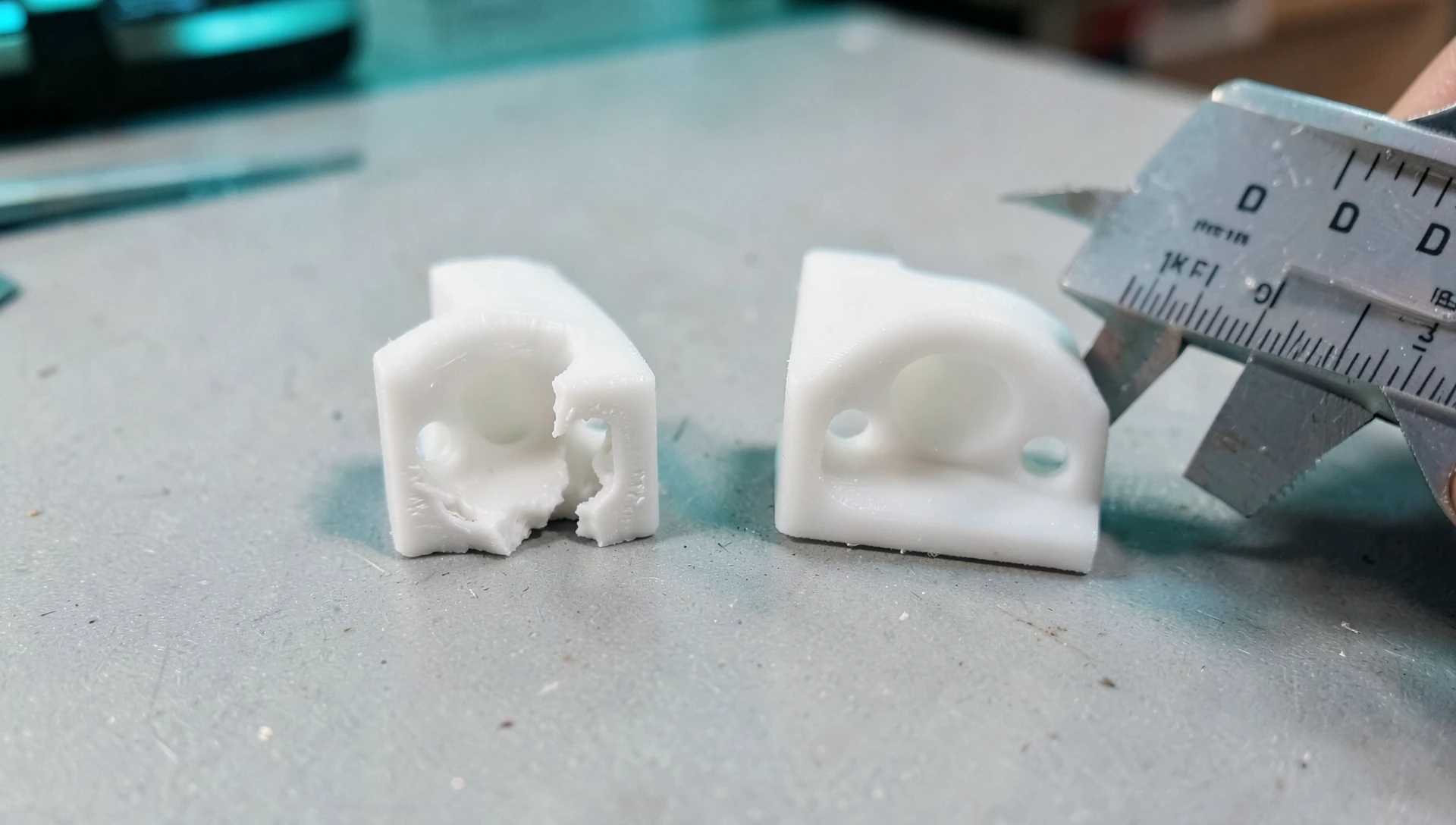
Nobody compares platforms at the start of a project. They compare after a delivery goes wrong. The usual story runs like this: a seller needs a housing for a small electronics product, orders a model for $45 on a marketplace, and receives an STL that looks correct in the preview window. The printer disagrees. Walls are 0.6 mm where the nozzle needs 1.2 mm, the boss holes are modeled at exactly 3.0 mm for an M3 screw with no clearance, and there is no parametric history to edit — just frozen mesh triangles.
At that point the buyer starts looking for something more structured, which is where CAD Crowd, Upwork, and dedicated studios enter the picture. The real question is not which website is better. It is which model of buying matches the risk in your project.
How a CAD Freelance Marketplace Works
Every cad freelance marketplace runs on the same economics. The platform takes a commission — typically 10 to 20 percent — and in exchange handles payments, escrow, and dispute resolution. It does not verify engineering competence. Portfolio images are self-uploaded, reviews come from buyers who often cannot judge whether a model is manufacturable, and a five-star rating frequently reflects communication rather than geometry.
This matters because CAD quality is invisible until manufacturing. A renderer and a design engineer produce visually identical previews. Only one of them thought about draft angles, wall thickness, shrinkage, and assembly tolerance. The marketplace structure gives you speed and buyer protection on payment, but transfers all technical judgment to you.
What You Get From a Fiverr CAD Designer
Hiring a Fiverr CAD designer is fast and cheap, and for the right job that is exactly the right trade. Gigs commonly start around $20 to $60 for a simple part, with delivery in two to five days. If you need a decorative object, a straightforward bracket from a dimensioned sketch, or a quick visual concept for a pitch deck, the platform delivers real value.
The weaknesses are structural, not personal. Fixed-price gigs discourage the back-and-forth that real design requires, so scope creep becomes a negotiation instead of a conversation. Revision counts are capped, usually at one or two. Native source files — SLDPRT, STEP with feature history — are often an upsell rather than a default, which means your next revision has to start over. And a large share of sellers work in mesh-first tools, so what you receive is a shell rather than a solid model a manufacturer can work from.
Where CAD Crowd Fits — Vetting and Contests
CAD Crowd positions itself as the engineering-specific option, and the vetting is genuinely tighter. Designers are screened, the talent pool skews toward mechanical and industrial backgrounds, and the platform supports design contests where multiple people submit concepts and you pay for the one you choose. For early-stage form exploration, that contest model has real merit.
The cost profile is different too. Expect quotes in the $250 to $1,500 range for a moderate mechanical part, and higher for assemblies. That is a fair price for engineering time, but it means CAD Crowd is not the answer when you need one bracket modeled by Thursday. The contest format also has a hidden cost: you get many first drafts and no sustained relationship, so the person who wins your contest may not be available for the four revisions that follow.
The Upwork CAD Designer Alternative
An Upwork CAD designer sits between the two. Hourly contracts allow proper iteration, work-diary tracking gives visibility, and long-term contracts make it possible to keep the same engineer across a product line. Rates run roughly $25 to $75 per hour for competent SolidWorks work, and considerably more for regulated or high-precision domains.
The trade is administrative. You are now a project manager: writing scope, reviewing hours, catching problems before they compound. Hourly billing rewards thoroughness, which is good for quality and unpredictable for budget. If you have engineering literacy and a project that will run for months, this is often the strongest of the three marketplaces.
What Marketplaces Miss: Manufacturing Intent
All three platforms share one blind spot. They sell modeling, not manufacturability. A model is only finished when the process that will make it has been designed into the geometry. For injection molding that means uniform wall thickness, a draft angle of one to two degrees on vertical faces, and no undercuts you have not budgeted a side-action for — the fundamentals Protolabs documents in its design guidance. For FDM printing it means overhangs kept under 45 degrees, holes oversized by 0.2 to 0.4 mm to survive elephant-foot, and orientation chosen so layer lines do not sit across the load path.
None of that appears in a gig description, and none of it is checked by a platform review system. It comes from the designer having built parts that were actually produced. When you brief any modeler, state the process, the material, the machine if you know it, and the fits that matter. That single paragraph eliminates most failed deliveries.

The Best Place to Hire a CAD Designer for Your Project
There is no universal answer, but there is a clean decision rule. If the part is simple, cosmetic, or disposable, a marketplace gig is efficient and you should not overthink it. If the part will be manufactured in volume, carries a fit or load requirement, or represents a product you intend to sell, the best place to hire a cad designer is somewhere that gives you native SolidWorks source files, a named engineer, and revisions treated as part of the job rather than a paid extra.
That is the model we built MiniCAD around. Every project is modeled parametrically in SolidWorks, delivered with STEP, STL, and 3MF alongside the native part file, and reviewed against the manufacturing process you named in the brief. Pricing is flat and published — Basic at $34, Standard at $69, Premium at $174 — so there is no hourly meter and no scope negotiation mid-project. You can see the kind of work that produces in our bracket and mount portfolio, and the full engagement model on the outsource CAD design and SolidWorks modeling service pages.
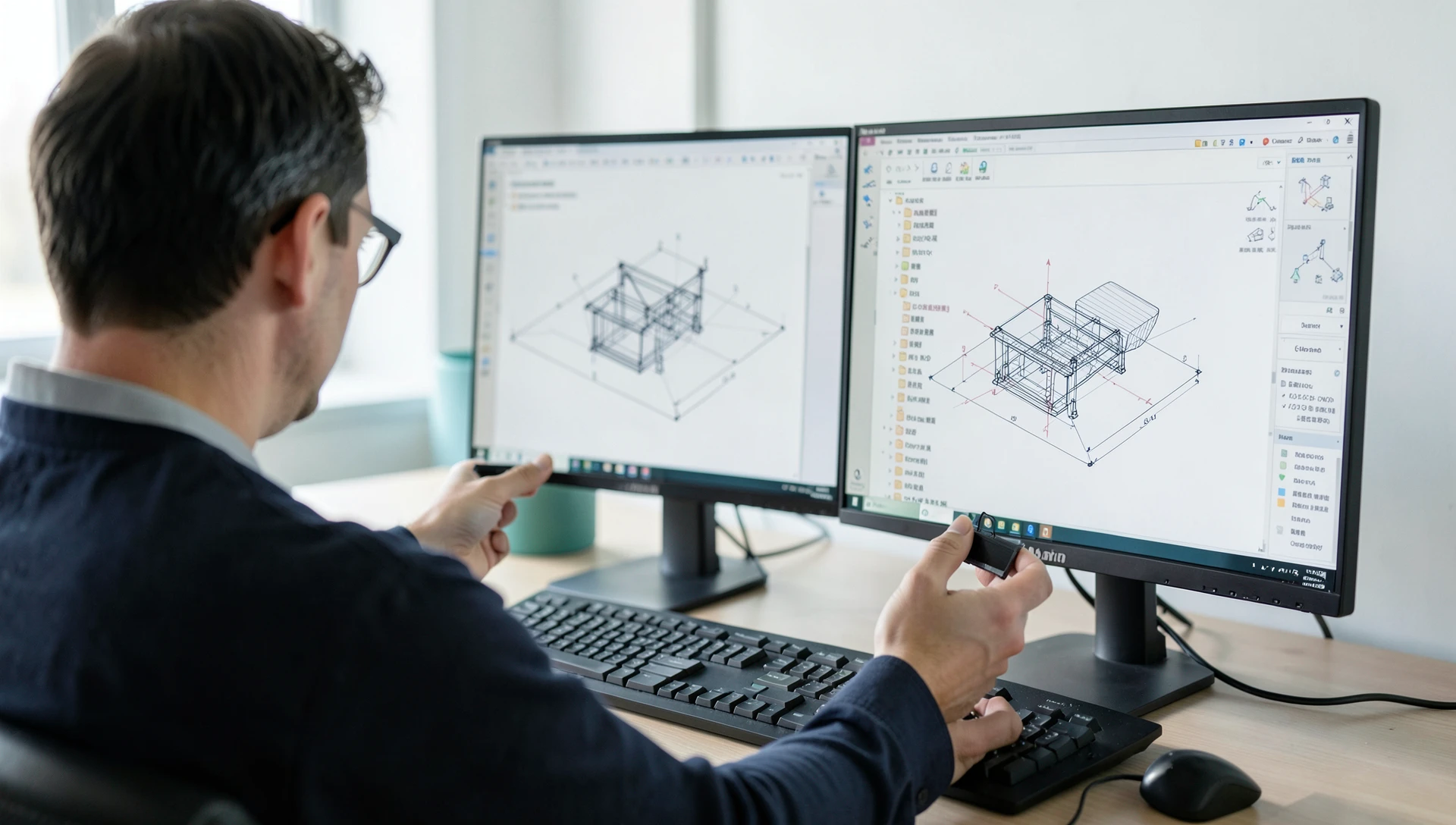
Whichever route you take, brief the process, insist on native files, and treat the first revision as expected rather than exceptional. If you would rather skip the sourcing entirely, MiniCAD has delivered more than 7,000 projects across 40+ countries with a 4.9-star rating from 4,470+ reviews and 24-hour delivery on standard parts. Start an order or email contact@minicad.io with your sketch, dimensions, and target process, and you will have a print-ready model back tomorrow.