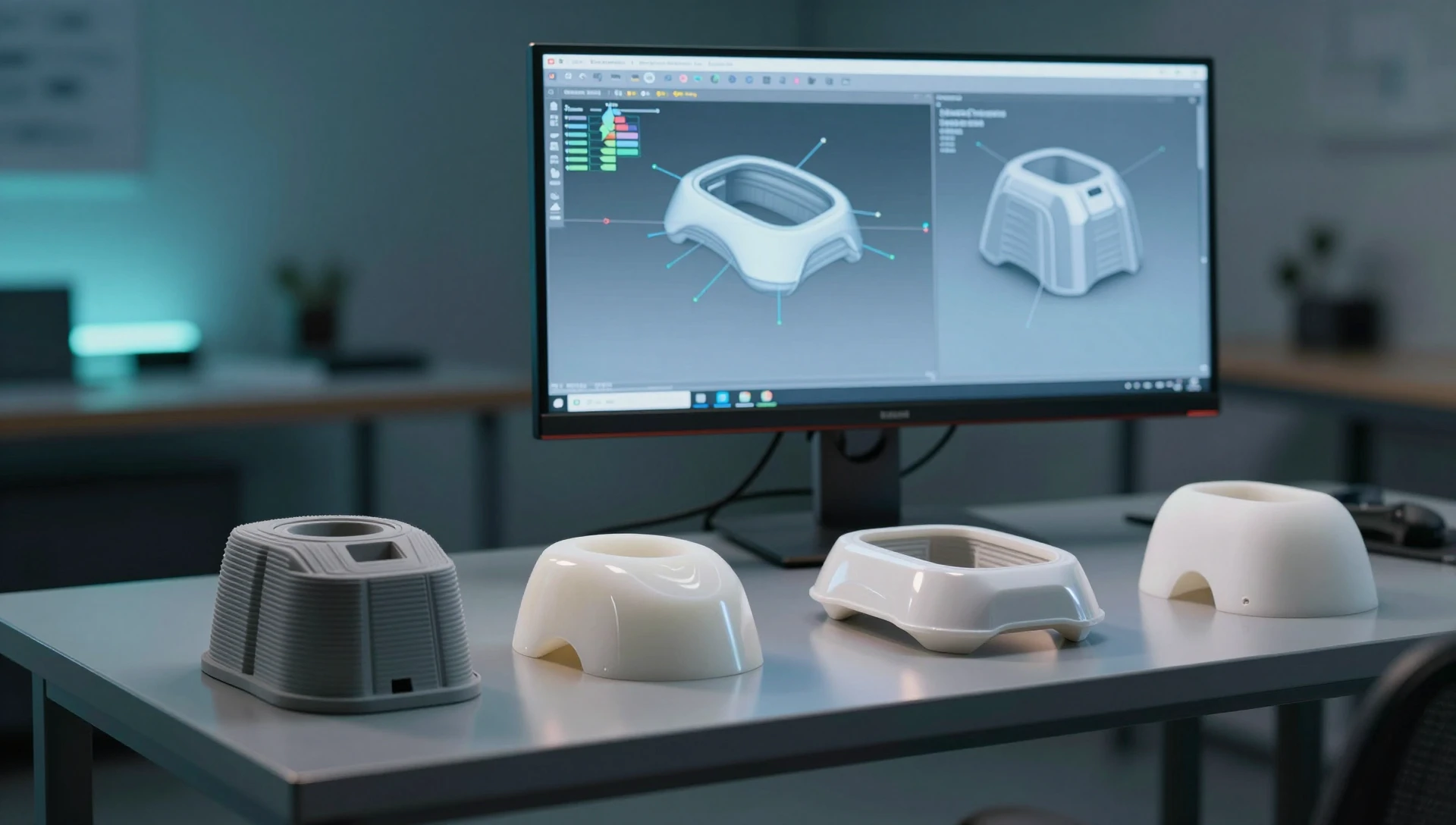
Most inventors underestimate product design prototype cost — sometimes by 40% or more — and that gap derails projects before they reach market. Whether you are designing a consumer device, an industrial component, or a new product for Amazon FBA, knowing what a prototype actually costs from sketch to physical part helps you set a realistic budget, choose the right technology for each round, and avoid the most common reason prototypes stall: running out of funds at iteration two.
What Drives Product Design Prototype Cost
Prototype cost is not a single number — it is a stack of phases, each with its own price tag. The main variables are part complexity (number of features, surfaces, and tolerances), the CAD modeling work required to build a manufacturable file, the prototyping technology chosen (FDM, SLA, CNC, or injection mold), the material, and the number of revision rounds before the design locks. Inventors who understand this breakdown control costs at every stage rather than treating the final invoice as a surprise.
The four cost layers: CAD design, printing or machining, finishing and post-processing, and iteration. Every project touches at least the first two. Projects with presentation-quality requirements or tight tolerances hit all four. Knowing which layers your project actually needs — and which you can defer — is where smart product prototype budgets are made.
The CAD Modeling Phase — Where the Budget Starts
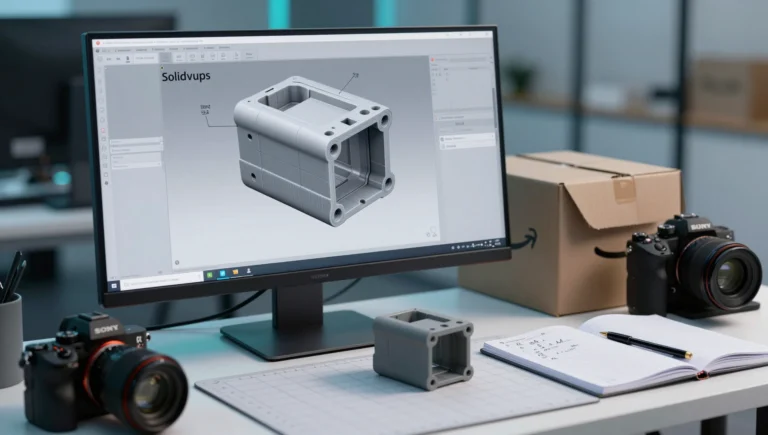
Before anything is printed or machined, the idea must become a precise digital file. That means a professional SolidWorks model — not a sketch, not a consumer-app mesh, not a rendering. CAD modeling typically accounts for 20–40% of total product design prototype cost on the first build, and a smaller share on subsequent rounds because the parametric model already exists and revisions are faster than rebuilding from scratch.
Simple single-part designs — a bracket, housing, or clip with standard geometry — typically cost $34–$69 for modeling alone. More complex parts with swept cuts, shell features, or compound surfaces run $69–$174. Full assemblies with multiple mating components, motion constraints, and tolerance-specified interfaces sit at $174 and above. These ranges reflect actual SolidWorks engineering time: the hours it takes to build a file a manufacturer, 3D printing service, or patent attorney can use without modification.
3D Printed Prototype Cost by Technology and Material
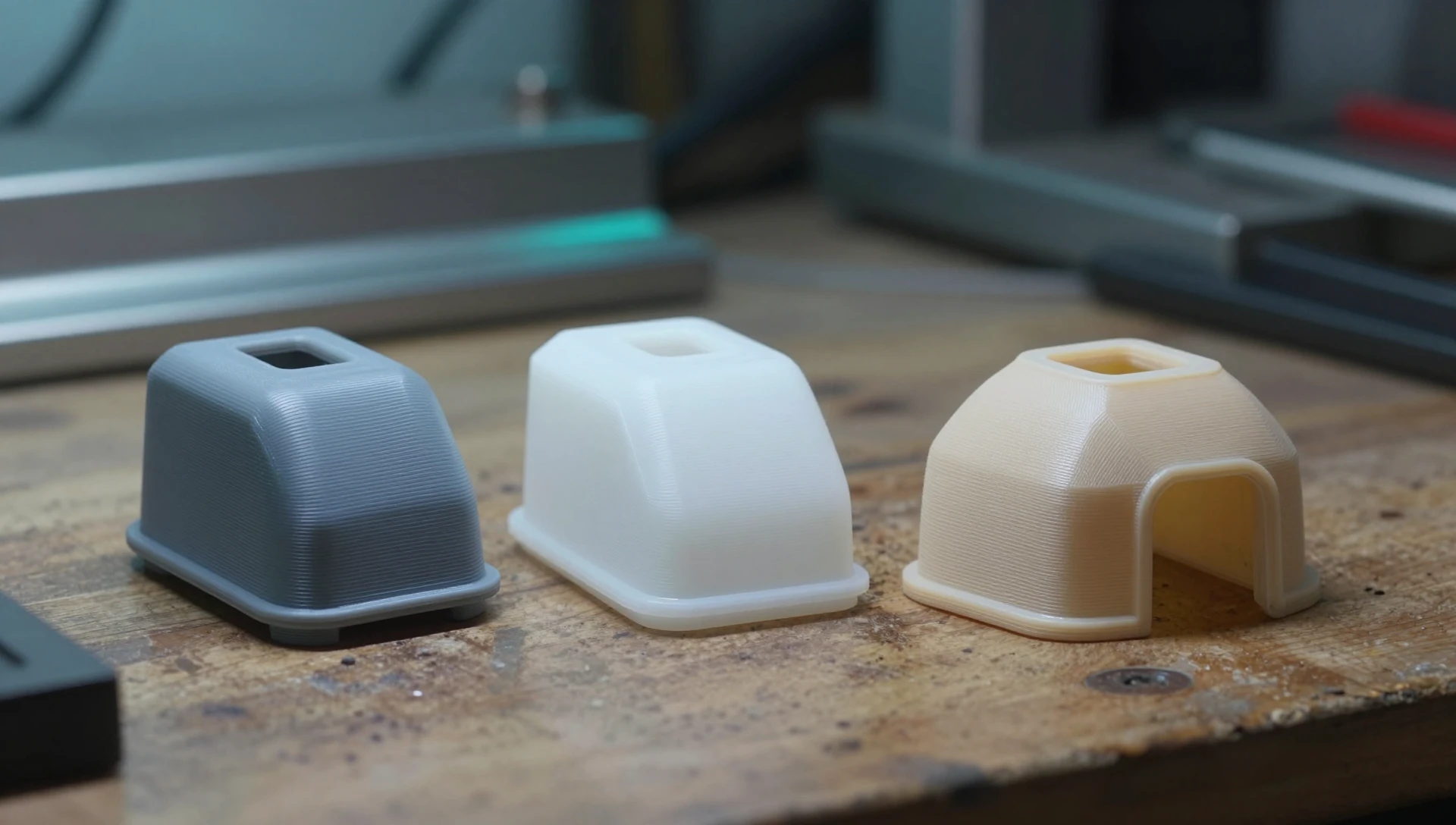
Once you have a clean STL or 3MF file, 3D printed prototype cost varies significantly by technology. FDM (fused deposition modeling) in PLA or PETG is the cheapest entry point. A palm-sized consumer product housing costs $8–$35 from a service bureau in material and machine time — less if you own the printer. FDM is ideal for fit checks, ergonomic testing, and investor demos where surface appearance is not the priority.
SLA resin printing produces smoother, more accurate surfaces closer to injection-molded quality. Resin runs $40–$100 per kilogram versus $20–$30 for quality PLA, and post-processing (washing, UV curing, sanding) adds labor. That same palm-sized part in resin typically costs $30–$90 from a service. SLS nylon removes support structures and produces durable, functional parts — expect $80–$250 per component from professional bureaus. According to Protolabs’ prototyping cost guide, complex housings with tight tolerances in SLA can reach $400–$700 per unit at professional quality, including post-processing.
How Complexity Scales the Prototype Development Cost
How much does a prototype cost in total? That depends almost entirely on complexity. Here are realistic ranges by project type, including both CAD modeling and a first-round print:
Simple single-part product (one housing, bracket, or clip): CAD $34–$69 + FDM print $15–$50 = total $50–$120.
Medium-complexity enclosure or device (2–4 parts, snap-fit assembly, cable routing): CAD $69–$174 + SLA or FDM prints $60–$180 = total $130–$350.
Full multi-part product (6+ components, mechanical motion, toleranced interfaces): CAD $174–$400 + mixed-technology prints and finishing = total $400–$1,200.
Consumer electronics enclosures with PCB mounting bosses, battery slots, and USB cutouts sit at the upper end of the medium tier. Expect $250–$600 for the first prototype including CAD and SLA printing. Medical device concepts requiring tight tolerances and biocompatible materials push into the $800–$2,000 range for a single prototype round.
Iteration Budget — Plan for More Than One Round
The single most common budgeting mistake is planning for one prototype. Across 7,000+ projects, virtually every product goes through at least two revision rounds before the design is stable enough for tooling quotes. Common triggers: snap fits too loose, wall sections that warp during printing, ergonomic grip that feels wrong in the hand, or a dimension that conflicts with an off-shelf component discovered after first assembly.
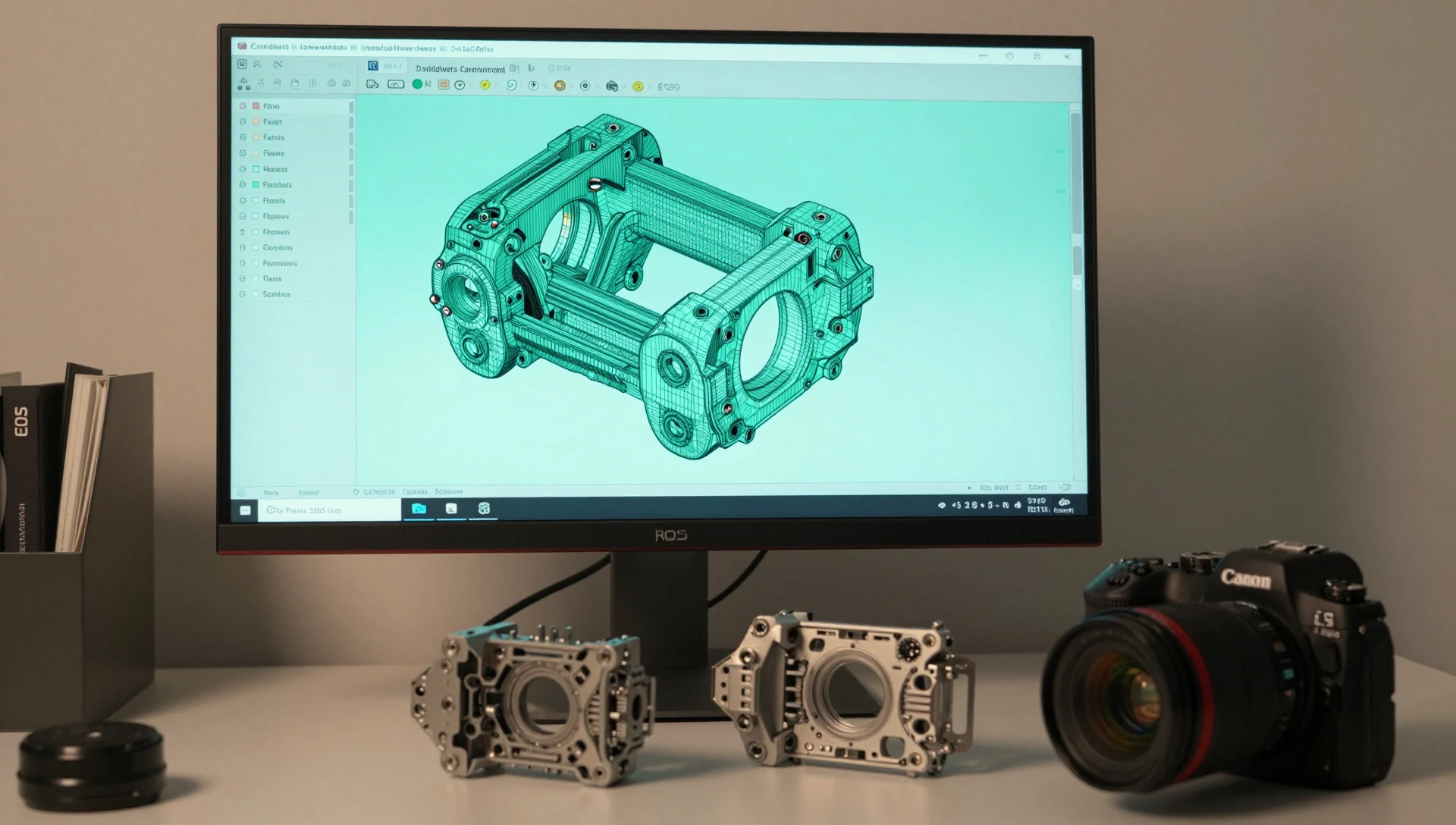
Parametric SolidWorks modeling makes iteration significantly cheaper on round two. Changing wall thickness, adjusting a boss diameter, or repositioning a cutout takes 15–30 minutes in the feature tree — versus hours of re-modeling in mesh-based software. Budget 50–70% of round-one cost per subsequent iteration. A $200 first prototype typically costs $80–$130 to revise, not $200 again. A realistic two-round product prototype budget for a medium-complexity product is $300–$500, not a one-time $150.
How to Reduce Prototype Costs Without Cutting Corners
The most effective cost control is investing in solid CAD upfront. A well-built parametric SolidWorks model with clean feature history is cheaper to iterate, cheaper to hand to a manufacturer, and cheaper to document for a patent application. Skipping quality CAD to save $30 now routinely costs $150–$500 in re-work when a manufacturer cannot interpret the geometry or a revision requires a full rebuild because the original file has no workable feature tree.
Use FDM for early-stage geometry checks and switch to SLA only when surface quality matters — for a final investor presentation or design-lock sign-off. Do not use SLS nylon or CNC machining until the geometry is stable. Those technologies cost 3–8x more than FDM and are not justified for a first-round fit test. Where possible, use the same studio for CAD and printing to eliminate file translation errors and avoid paying twice for geometry corrections.
Getting a Realistic Quote for Your Product Prototype
At the sketch stage, a reasonable first-prototype budget for most consumer products is $150–$500 — CAD modeling plus an FDM or resin print. Plan for two rounds and set aside $300–$1,000 total before you are ready for tooling quotes or manufacturing samples. Complex multi-part assemblies or products with tight tolerances should budget $600–$2,500 for the first two prototype rounds.
Our prototype design service covers SolidWorks modeling, STL preparation, and revision support — with 24-hour delivery on most single-part designs. Full package prices are on our pricing page. With 7,000+ projects delivered across 40+ countries and a 4.9★ rating from 4,470+ verified clients, we give you an honest cost estimate before any work begins — so your prototype budget never surprises you. Submit your sketch or concept at minicad.io/quote and we will send a detailed breakdown within 24 hours. Email us anytime at contact@minicad.io.