Picking the wrong filament material is one of the most avoidable mistakes in FDM prototyping. Material selection for FDM 3D printing determines whether a part survives a thermal test, snaps under load, or warps off the bed three hours into a print. The good news: once you understand what each material actually does, the decision becomes systematic rather than guesswork.
Why Material Selection for FDM 3D Printing Affects Every Dimension
FDM printers deposit melted filament in layers, which means every mechanical property — tensile strength, heat resistance, layer adhesion, surface finish — is partly determined by the material you load before hitting print. A housing that sits on a desk all day and a bracket that lives near a heat source share virtually nothing from a materials standpoint.
The four variables that drive material selection are operating temperature, mechanical load, chemical exposure, and required dimensional tolerance. Run through those four before opening your slicer. Getting one wrong often means a failed part, a reprint, and a lost day.
PLA — The Starting Point and Its Actual Limits
PLA (polylactic acid) is the most forgiving FDM filament. It prints at 195–220 °C, needs no enclosure, warps minimally, and produces clean surface detail. For concept models, display pieces, and form-fit prototypes, it is genuinely hard to beat on cost and ease.
Where PLA fails: heat deflection temperature sits around 55–60 °C under load. That means a glove box interior, a part near a USB charger, or anything left in a parked car in summer can soften or creep. PLA also has lower impact resistance than most engineering filaments and absorbs moisture from the air, degrading if stored loosely for months. If the part needs to survive real use rather than just a review meeting, PLA is usually not the final answer.
PLA vs PETG for 3D Printing — The Most Useful First Upgrade
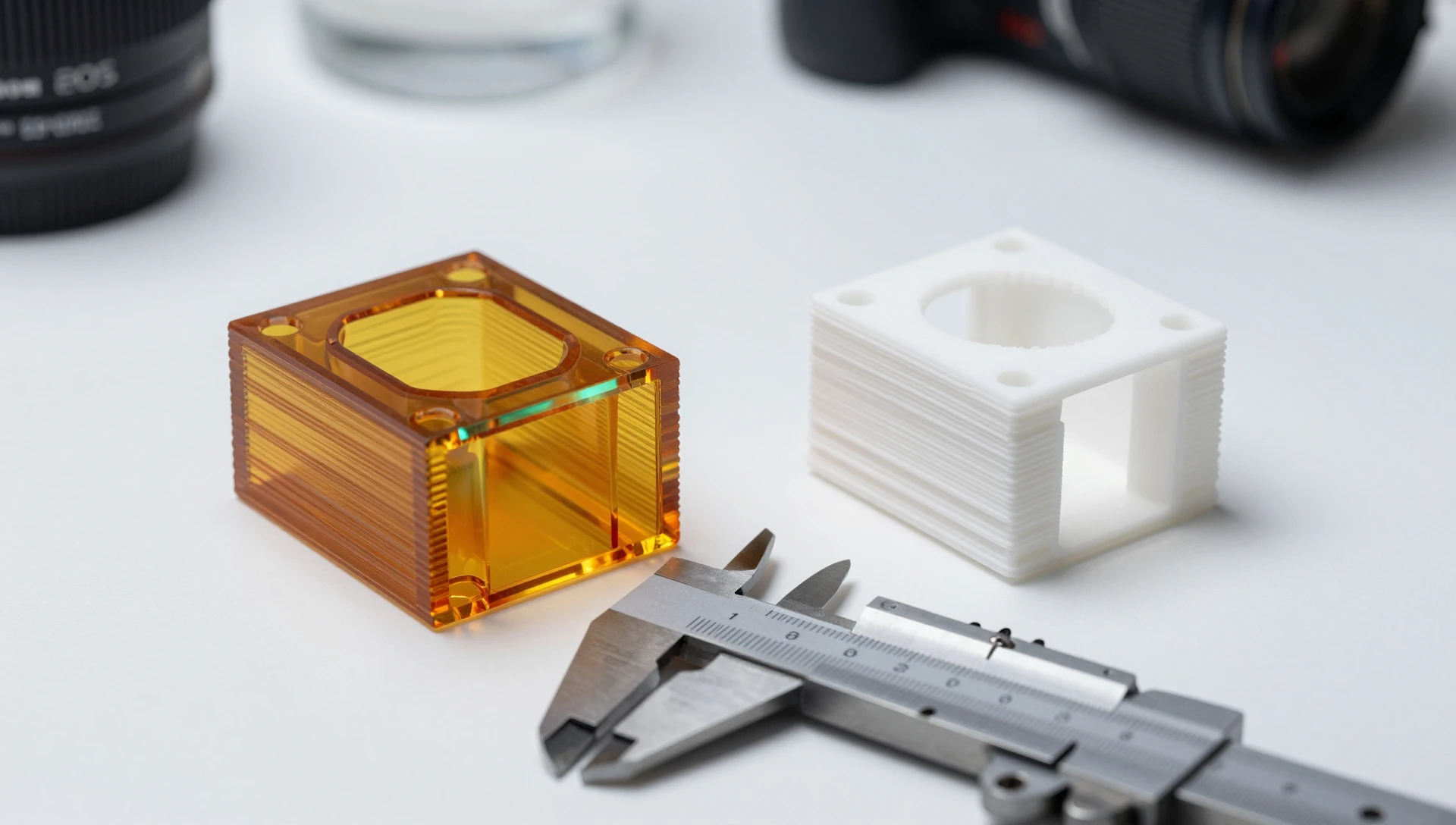
The pla vs petg for 3d printing comparison is where most engineers make their first meaningful materials upgrade. PETG (polyethylene terephthalate glycol) raises heat deflection to roughly 70–80 °C, adds genuine toughness, and resists moisture far better than PLA. It prints at 230–250 °C and still does not need an enclosure in most shop environments.
PETG bonds well between layers — which matters for parts loaded in the Z direction — and is noticeably more ductile than PLA, so it bends before it snaps. It does not sand or paint as cleanly as PLA, and strings slightly more, so retraction settings need tuning. For functional brackets, snap-fit housings, cable management clips, and light-duty mechanical components, PETG delivers the best balance of ease and real-world usefulness. In our studio we default to PETG for any prototype that will be handled repeatedly, assembled, or shipped to a client for physical review.
ABS vs PLA 3D Printing — When Heat Resistance and Impact Strength Win
The abs vs pla 3d printing decision comes down to operating temperature and impact resistance. ABS withstands 95–105 °C continuously and handles repeated flexing without fatigue cracking. It is also more machinable than PLA — drilling, tapping, and acetone vapor polishing all work well on ABS.
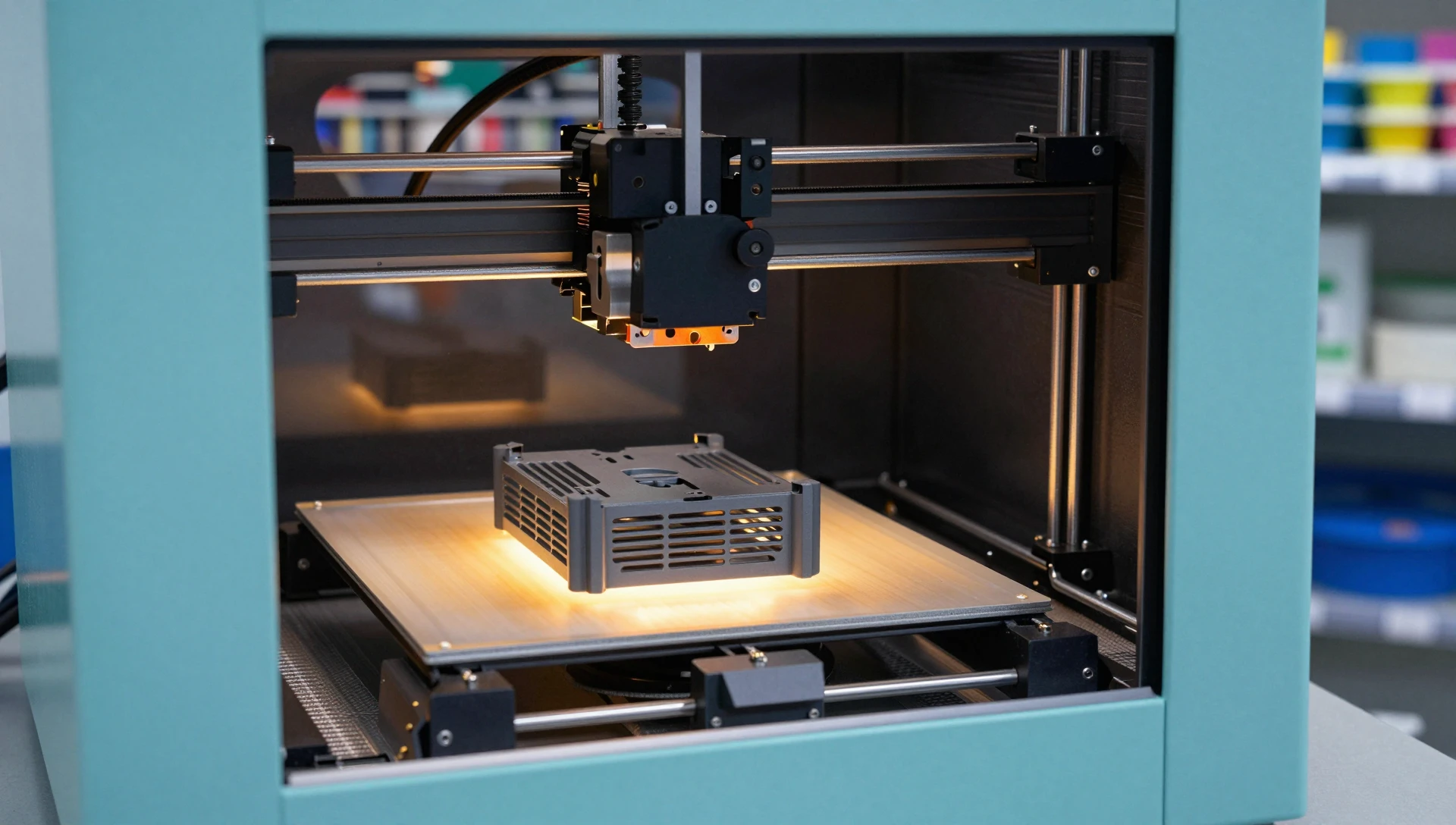
The trade-off is print difficulty. ABS warps without an enclosure, delaminates between layers if the ambient temperature drops mid-print, and releases VOCs that require ventilation. It also shrinks around 1–1.5% on cooling — a critical detail when modeling press-fit features or mating parts with tight clearances. ASA offers nearly identical mechanical properties with better UV stability and somewhat less warping, making it a strong alternative wherever outdoor exposure is a factor.
Nylon, ASA, and Composite Filaments — Engineering-Grade Options
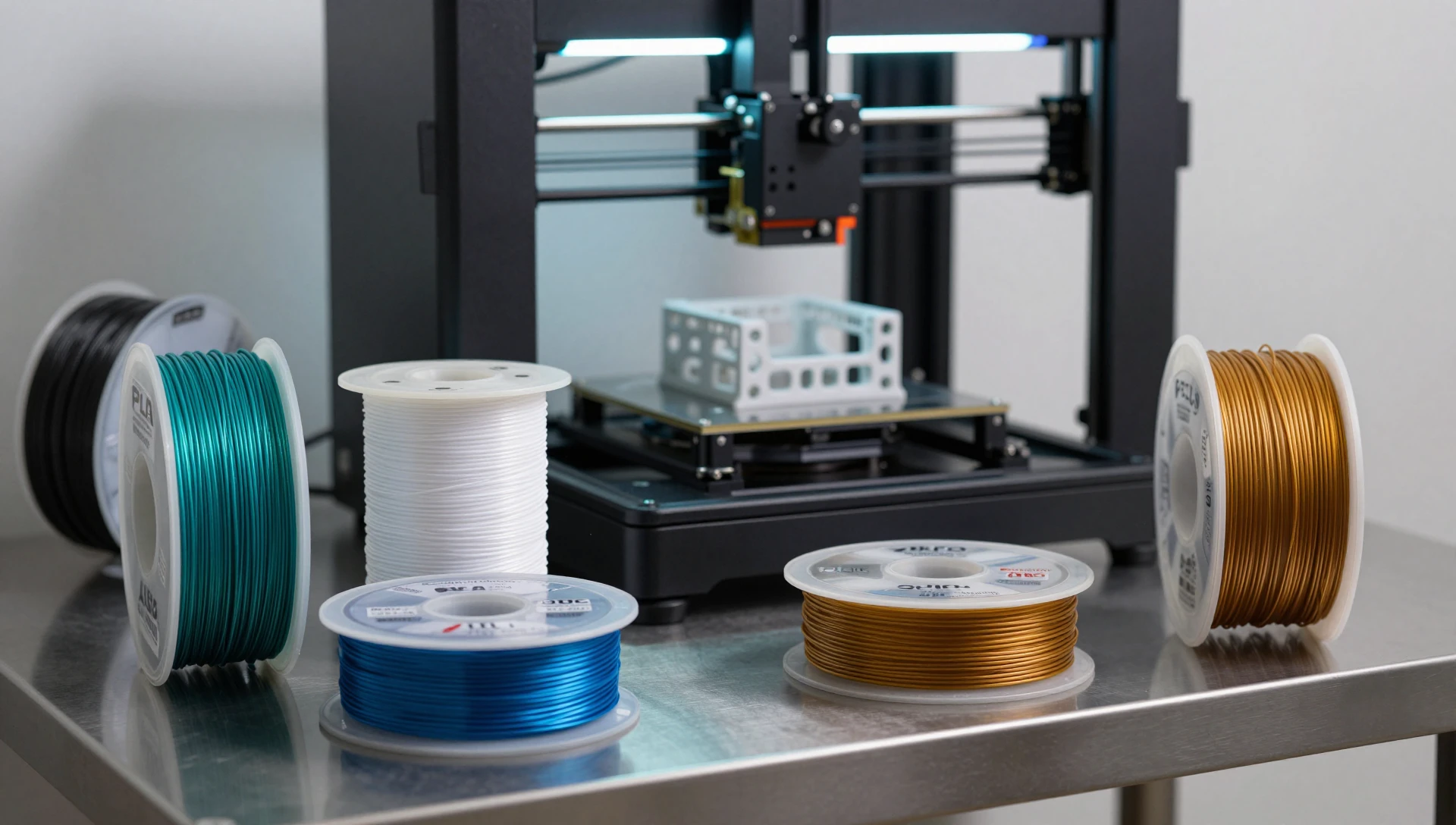
Beyond the commodity filaments, the choices get specialized:
Nylon (PA12, PA6): Outstanding fatigue resistance, chemical resistance, and toughness. Self-lubricating surfaces make it useful for gears, bushings, and living hinges. The critical constraint: nylon is hygroscopic and must be dried before printing — wet nylon produces bubbles, stringing, and weak layer bonds that look like proper prints but fail under any real load. Print at 240–260 °C in an enclosed machine, and run a drying cycle at 70 °C for 6–12 hours if the spool has been open for more than a few days.
PETG-CF and PLA-CF: Carbon fiber-filled variants increase stiffness dramatically — up to 3× the tensile modulus of the base material — and reduce weight. The trade-off is brittleness and abrasive wear on brass nozzles. Always use a hardened steel nozzle with filled filaments. These grades suit lightweight structural parts, drone frames, and stiff brackets where rigidity matters more than impact toughness.
Best Filament for Functional 3D Prints — A Practical Decision Table
Selecting the best filament for functional 3d prints gets easier once you match the requirement to the material:
Concept or form-fit prototype: PLA — fast, cheap, clean surface detail.
Functional prototype, room temperature: PETG — best balance of ease and toughness.
Thermal load 80–100 °C: ABS or ASA — account for 1–1.5% shrinkage on toleranced features.
High impact and repeated flexing: Nylon (dry-stored, enclosed printer).
Structural stiffness with low weight: PETG-CF or PLA-CF with a hardened nozzle.
Outdoor or UV exposure: ASA, or PETG with a UV-resistant topcoat.
When exact tolerances matter — press-fit pins, sliding joints, snap-fit latches — print a test coupon in the chosen material and measure before committing the full part. Every filament brand has slightly different shrinkage within the same polymer family, and a 0.2 mm dimensional error at full scale becomes a stuck assembly or a loose joint that vibrates apart.
FDM Filament Material Guide — Reading a Technical Datasheet
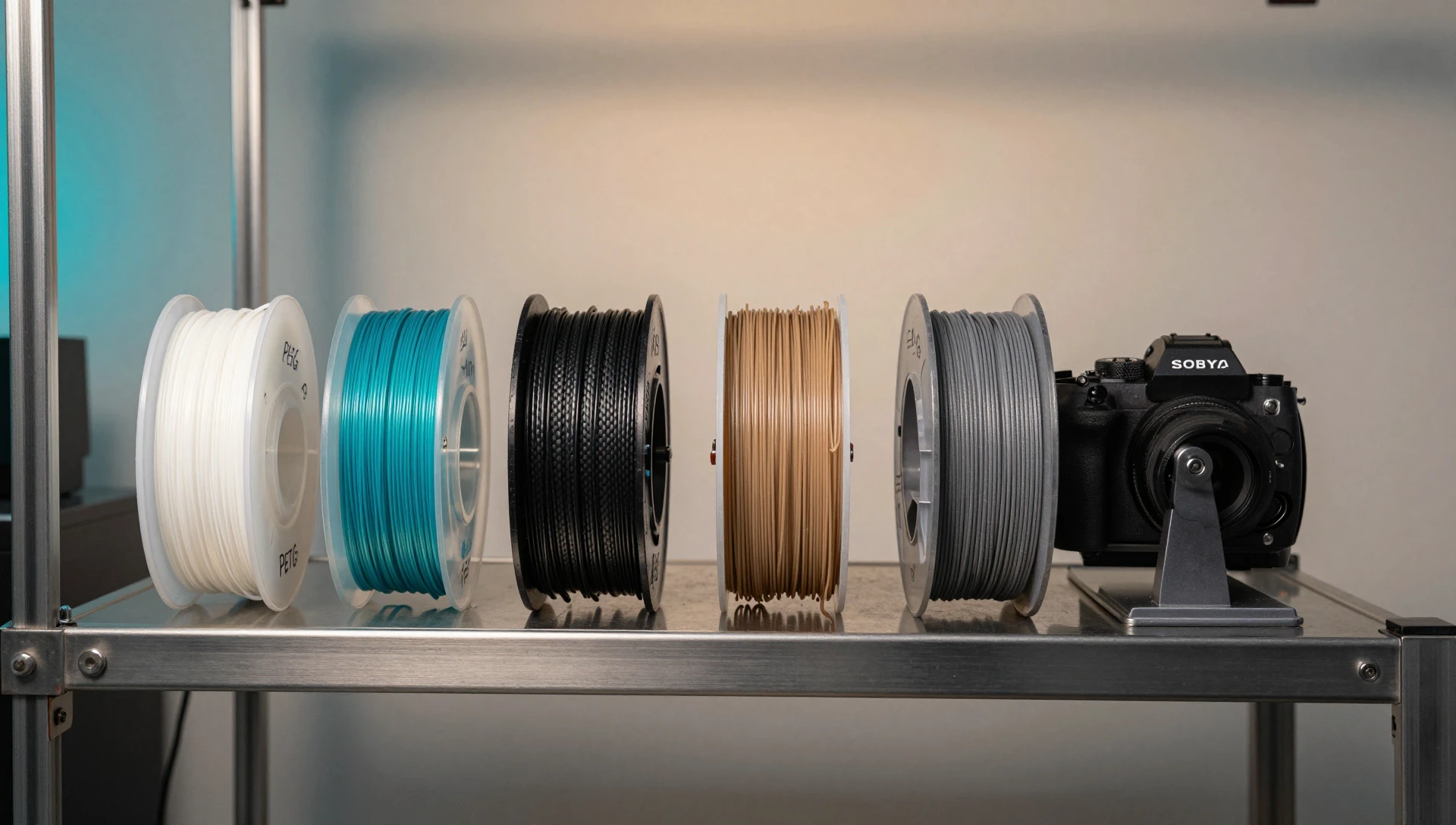
Filament spec sheets can mislead if you read only the headline number. A few things to verify on every fdm filament material guide or datasheet:
Heat deflection temperature (HDT): Always check the test load. The 0.45 MPa figure is often 15–20 °C higher than the 1.82 MPa figure — and the higher-load result is what approximates real parts under stress. Use the 1.82 MPa number for any thermal specification that matters.
Layer adhesion strength: Isotropic tensile data describes XY performance. Z-direction (inter-layer) strength runs about 60–80% of XY in a well-tuned print. For load-bearing parts, orient the model so the primary load runs in the XY plane. The Prusa material guide publishes tested layer-adhesion figures for common filaments and serves as a reliable benchmark across brands.
Water absorption: PLA and PETG absorb very little and can be stored on open spools for months. Nylon absorbs 3–8% by weight and needs active management. If you are printing Nylon parts and the surface finish looks grainy or bubbled, moisture is almost always the cause — not a settings problem.
If you have a part designed in SolidWorks and need the STL optimized for a specific material — wall thicknesses tuned, tolerances adjusted for the filament’s shrinkage rate — our team handles the full workflow. See the STL file design service for details on how we prepare print-ready geometry.
We have delivered 7,000+ projects across 40+ countries — 4.9★ from 4,470+ verified reviews and 24-hour delivery on standard parts. If you have a part that needs to hold up under real conditions, get a quote and we will match the geometry and material to the application. Reach us at contact@minicad.io.