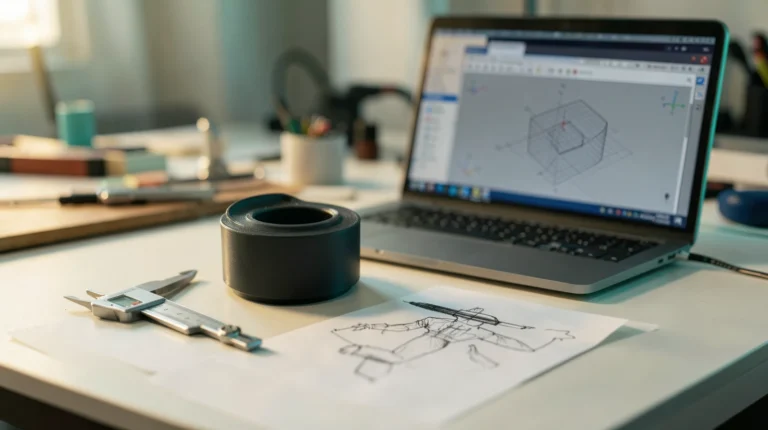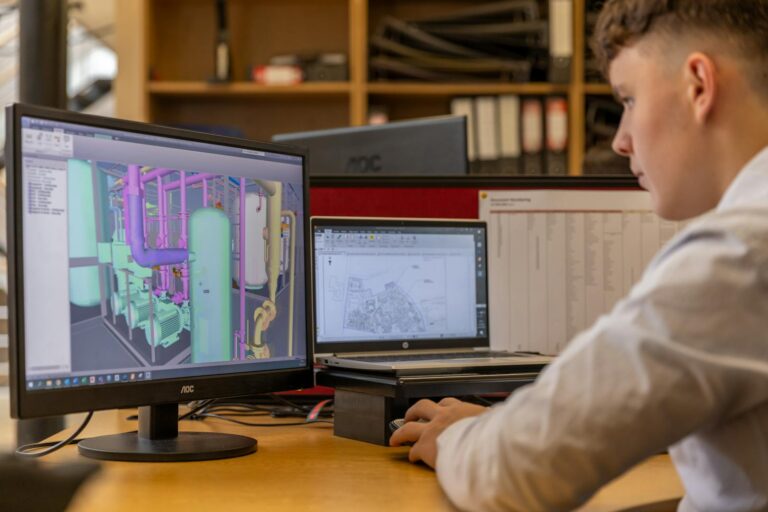

Amazon sellers who invest in professional product design for amazon sellers before their first listing launch consistently achieve 25 to 40 percent measurably lower return rates and 15 to 30 percent higher conversion rates than competitors who skip the engineering step and go straight from a Chinese factory sample to a live listing. The reason is not complicated — professionally designed products fit their packaging correctly, survive fulfillment center handling without damage, photograph consistently across color variants through 3D rendering, and meet FBA dimensional thresholds that prevent oversized fulfillment fees from destroying unit economics.
Why Product Design for Amazon Sellers Is Not Optional
Amazon’s marketplace algorithm rewards listings with low return rates, high conversion rates, and positive review velocity. Every variable influenced by product design — dimensional accuracy, packaging durability, visual presentation quality, and functional reliability under real use — directly feeds these algorithmic ranking signals. A product that arrives damaged because the packaging was not engineered for conveyor system handling generates returns that tank your seller metrics. A listing with inconsistent smartphone photos converts 20 to 35 percent worse than a competitor’s listing with professional 3D renders that show the product from every angle with perfect lighting consistency. Engineering is not overhead — it is the foundation that every other seller success metric depends on.
The most successful Amazon private label brands treat product design for amazon sellers as a competitive moat. While competitors source generic factory samples and compete solely on price, engineered products compete on quality signals that justify premium pricing — better materials documented in listing copy, more durable construction visible in exploded-view images, and ergonomic refinements mentioned in positive reviews that new buyers read before purchasing.
Designing Within FBA Size Tier Boundaries
Amazon’s fulfillment fee tiers create dimensional cliffs where a single centimeter of extra product or packaging width increases your per-unit fee by $3 to $8. Our design process models the product and packaging together as a single SolidWorks assembly, verifying that total packaged dimensions stay safely within your target tier with 5 mm margin per axis for manufacturing variation. This dimensional discipline applied during the CAD phase — when fixing it costs nothing — prevents the fulfillment fee surprise that occurs when the first warehouse shipment reveals your product is classified one tier higher than budgeted, eroding margin on every unit for the entire production run.
3D Renders That Outperform Product Photography
Professional 3D rendering from a SolidWorks model produces listing images months before your first production unit ships — enabling pre-launch listing optimization, test PPC campaigns with real visuals, and social media audience building while manufacturing proceeds in parallel. A complete 7-image listing package costs $200 to $500 via rendering versus $800 to $2,000 via traditional photography. Each additional color variant costs $20 to $40 via rendering versus $300 to $800 for a separate photography session. For a product in 6 colors, rendering saves $3,000 to $6,000 in visual production costs — money that funds your PPC launch budget instead. The Jungle Scout seller blog provides data confirming that listing image quality is the strongest single predictor of click-through rate on Amazon search results.

Packaging Designed for Fulfillment Center Survival
Amazon fulfillment centers process millions of units daily through automated conveyors, robotic sorting, and multi-height stacking. Your packaged product experiences 3 to 4 foot drops during sorting, compression from 4 to 6 boxes stacked in storage, and lateral forces during conveyor transitions. Custom packaging insert design — modeled in SolidWorks from your product geometry with compression allowances calculated for the product’s weight and fragility — prevents the damage-driven returns that destroy seller metrics and generate the negative reviews that actively suppress organic search ranking for months.
Prototype Testing Before Manufacturing Commitment
Never commit to production tooling based solely on a CAD model, no matter how confident the design appears on screen. 3D print a functional prototype in PETG, handle it under real-world conditions, assemble it with all intended mating components, and package it in a mockup of the final retail box. Then ship the packaged mockup to yourself via a standard carrier — simulating the handling stress your product will experience in the Amazon fulfillment pipeline between warehouse receipt and customer doorstep delivery. This $50 to $100 test catches design and packaging problems that prevent $5,000 to $50,000 in production tooling modifications, product recalls, and negative review cascades that take months of positive sales velocity to recover from in Amazon’s search ranking algorithm.
Our FBA product design workflow includes a pre-production testing checklist covering the 12 most common failure modes we observe in FBA products — from packaging dimensions that barely exceed tier boundaries under manufacturing variation to snap-fit closures that fatigue-crack after 15 open-close cycles when customers expected hundreds. This checklist is derived from 9 years of experience and thousands of delivered product design projects — not from theoretical engineering guidelines that have never been tested against Amazon’s actual fulfillment handling forces and customer use patterns.
Engineering Your Competitive Advantage
Before commissioning design, buy your top three competitors’ products and measure them. Read their one-star and two-star reviews. Every complaint — “the lid broke,” “it does not fit my drawer,” “the handle is uncomfortable” — is a design specification for your improved version. Your CAD designer engineers solutions to those exact failures, transforming competitor weaknesses into your measurable competitive advantages documented with engineering evidence in your listing copy and A+ content.

Explore real examples of this work in our portfolio — see our multi-color 3D printed NFC coin and custom 3D printed storage container projects. Need professional engineering support? Our prototype design service and SolidWorks modeling service deliver production-ready files.
From sketch to factory: the path that avoids tooling rework
Sending a sketch straight to a factory means the factory designs your product for you, to its own tooling, with no file you own. Two to three mold changes at $200 to $1,500 each are normal on that route, and 16 to 24 weeks pass before the first good sample. The CAD route costs a package ($79 to $289), and every later change starts from a file you own.
1. Sketch with an exact envelope
Give the overall size as numbers, for example 80 by 40 by 20 mm, the parts it has to fit (battery, PCB, lid, a mating product) and the features that sell it. A photo of a competitor with the changes you want marked up is a good brief.
2. CAD model built for manufacturing
Walls 1.5 mm minimum, 2 to 3 mm where the part takes load, uniform within 10 percent. Draft angles of 1 to 3 degrees on every face the mold pulls off. No undercuts unless a slide is budgeted. Snap fits and ribs sized for the material. Fillets on every outside edge. These rules are what turns a drawing into a part a factory quotes without a redesign.
3. Prototype before tooling
An FDM print costs $2 to $20 and a resin print $5 to $50; a change to a steel mold costs $800 to $3,000 and four to eight weeks. Plan two to three print iterations and test fit, assembly and packaging on each.
4. The file package the factory needs
- STEP (or IGES and Parasolid if the factory asks) for the tooling engineer.
- Native CAD file (SLDPRT) so changes stay cheap.
- PDF drawing with critical dimensions, tolerances and the surface finish, for example SPI A-2 gloss or SPI C-1 matte on visible faces.
- Material and color: resin grade and a Pantone or RAL code.
- A bill of materials for multi-part products.
Send the same package to three or more factories: identical inputs make the quotes comparable. The CAD model also gives the exact dimensions and weight for the listing, which decides the FBA size tier.
5. Design freeze
Once tooling starts, a change restarts it at $1,500 to $5,000. Freeze the design on the last approved prototype and prepare the listing in parallel: renders, copy and packaging art from the final model save two to three weeks at launch.
Timeline and budget
Plan 12 to 20 weeks from sketch to factory-ready files on the CAD route: the model, two to four weeks of prototyping on your side, the file package, then tooling. The design cost is the package price plus prints; the savings are the mold changes you do not pay for.
The 1 cm that costs $15,000
FBA fees jump at the size-tier boundaries. A product that is 1 cm too long for the small-standard tier pays the large-standard fee on every unit; the difference compounds to $15,000 to $40,000 over 5,000 units. Set the envelope with the fee table open, and check the packaged dimensions, not the product alone: an insert of foam, pulp or corrugated board designed as its own CAD part keeps the box inside the tier. Check the current fee rates before you decide; they change every year.
The seven-image listing stack
A listing needs seven images, and all of them can be rendered from the CAD model before a single unit exists: (1) the main image on pure white at 85 percent frame fill; (2) a size-and-scale image with dimensions; (3) a feature close-up; (4) a lifestyle scene; (5) a what-is-in-the-box or packaging image; (6) a comparison or infographic; (7) a color or variant view. Deliver them at 3000 by 3000 pixels. Packaging that protects the product pays for itself quickly: at a 2 percent damage rate on a $15 item, an insert breaks even after about 50 units.
Start Your Amazon Product Design Today
Professional product design for amazon sellers is the highest-ROI pre-launch investment available to FBA brands. Products engineered for dimensional compliance, packaging durability, and visual excellence outperform unengineered competitors on every metric Amazon’s algorithm measures.
Ready to turn your idea into a 3D CAD model? MiniCAD has delivered 7,000+ orders over 9+ years, rated 4.9 out of 5 across 4,470+ Fiverr reviews.
Packages start at $79. Send your sketch, photo or sample through our quote form and get a personal quote within 24 hours. You pay only after you accept it. Questions? Email contact@minicad.io.