When a product must survive real-world mechanical loads — thermal cycling, vibration, impact, fatigue, and sustained stress over years of service — generic CAD modeling is not enough. Mechanical design services combine SolidWorks parametric modeling with engineering analysis (FEA, tolerance stack-up, material selection, fatigue life prediction) to produce parts and assemblies that function reliably under the exact operating conditions your application demands. This guide covers what professional mechanical cad design includes, how to evaluate providers, and what deliverables separate engineering-grade output from cosmetic-only modeling.
What Mechanical Design Services Actually Include
A comprehensive mechanical engineering design engagement goes far beyond 3D geometry creation. It starts with a requirements definition phase where operating loads, environmental conditions, material constraints, manufacturing method, service life targets, and regulatory compliance requirements are documented before any modeling begins. The parametric SolidWorks model is then built with these engineering constraints embedded in every design decision — wall thicknesses calculated from stress analysis rather than aesthetic preference, fillet radii sized for stress concentration relief rather than visual smoothness, and fastener selections based on joint strength calculations rather than availability convenience.
Beyond the geometry, professional mechanical design services deliver analysis documentation proving the design meets requirements. This includes finite element analysis (FEA) reports showing stress distribution, safety factors, and deflection under specified loads. Tolerance stack-up analysis demonstrating that assembled components fit correctly across the full range of manufacturing variation. Material selection justification referencing MatWeb material database property data comparing candidates against the application’s mechanical, thermal, chemical, and cost requirements. And manufacturing process recommendations based on geometry compatibility, production volume, and per-unit cost optimization.
The deliverable package for a complete machine design service project includes native SolidWorks files (SLDPRT, SLDASM, SLDDRW), STEP exports, technical drawings with GD&T fundamentals reference callouts, FEA analysis reports with load cases and safety factors documented, a bill of materials with specified commercial components (bearings, fasteners, seals, springs), and a design review document summarizing key engineering decisions and their justification. This documentation package gives your manufacturing team everything they need to produce the part and your quality team everything they need to inspect it — without requiring a phone call back to the designer.

When You Need FEA and When You Do Not
Finite element analysis divides your part into thousands of small elements, applies the specified loads and boundary conditions, and calculates stress, strain, and displacement at every point in the geometry. FEA is essential when the consequence of failure is safety-critical (structural components, pressure vessels, lifting hardware), when the loading is complex (combined bending, torsion, and thermal expansion), or when material cost optimization justifies the analysis investment (shaving 0.5 mm of wall thickness across 100,000 production units saves significant material cost).
FEA is unnecessary for simple brackets with obvious load paths and generous safety margins, for non-structural cosmetic housings where appearance matters more than strength, and for prototype parts that will be physically tested before production commitment. The analysis typically adds $100 to $300 to a mechanical cad design project — justified when failure cost exceeds analysis cost, wasteful when the part could be over-designed with $2 of extra material and zero risk. Our studio recommends FEA based on the specific failure consequence and cost-benefit calculation for each project, not as a default upsell applied to every engagement.
Tolerance Stack-Up Analysis for Assembled Products
When multiple parts assemble together, individual dimensional variations accumulate. A five-part assembly where each part has plus or minus 0.1 mm tolerance on its mating dimension can accumulate up to 0.5 mm of total positional error — enough to misalign mounting holes, create visible gaps in cosmetic seams, or prevent snap-fit features from engaging. Tolerance stack-up analysis calculates this cumulative variation mathematically, identifying the critical tolerance chain and recommending individual part tolerances that keep the assembly functional across the full range of manufacturing variation.
Statistical tolerance analysis (RSS method) is more cost-effective than worst-case analysis for production volumes above 1,000 units because it allows looser individual tolerances (cheaper to manufacture) while maintaining the required assembly fit probability at 99.7 percent confidence or better. Our mechanical engineering design workflow includes tolerance analysis for every multi-part assembly project, with the analysis method (worst-case or statistical) selected based on production volume, quality requirements, and the client’s risk tolerance for occasional out-of-spec assemblies that may require rework or sorting.

Engineering Material Selection Beyond the Obvious Choices
Material selection is where mechanical product design expertise separates experienced engineers from general-purpose CAD modelers. The obvious choice — “aluminum because it’s light” or “ABS because it’s common” — is frequently wrong when the full requirements picture is considered. Aluminum 6061-T6 is excellent for CNC machined parts but terrible for injection molding. ABS handles impact well but degrades under UV exposure within months. Nylon is strong and chemically resistant but absorbs moisture that changes dimensions by 1 to 2 percent over weeks in humid environments.
Professional material selection starts with a requirements matrix: tensile strength, yield strength, elongation at break, impact resistance, continuous operating temperature range, chemical exposure environment, UV stability, electrical properties (conductive or insulating), cost per kilogram, and availability in the required manufacturing form (sheet, bar, pellets, filament). The MatWeb material database provides comprehensive property data for over 100,000 materials that we reference when comparing candidates. Our material recommendation documents include at least two viable options with a trade-off summary explaining why the primary recommendation was selected and under what changed conditions the alternative would become the better choice.
Design for Manufacturing — The Mechanical Engineer’s Core Skill
A mechanically sound design that cannot be manufactured economically is a failed design. Design for manufacturing (DFM) ensures that every geometric feature is compatible with the intended production process and that the part can be produced at the target cost per unit. For injection molding: minimum 1-degree draft on every surface parallel to the mold pull direction, uniform wall thickness within 10 percent variation, generous radii at all transitions to promote material flow and prevent sink marks, and no undercuts that require side-action mechanisms unless the production volume justifies the additional mold complexity cost.
For CNC machining: internal corner radii at least equal to the cutting tool radius (typically 1.5 to 3 mm minimum), pocket depth-to-width ratios below 4:1 to prevent tool deflection and chatter, and sufficient fixture clamping surface area for secure workholding. For sheet metal: bend radii proportional to material thickness (minimum 1x thickness for mild steel), hole-to-bend distances at least 2.5x material thickness, and flat patterns that nest efficiently on standard sheet sizes to minimize material waste. The Protolabs design tip library provides interactive DFM feedback on uploaded CAD files across all three manufacturing processes.

Mechanism Design — Moving Parts That Actually Work
Mechanical design services frequently involve mechanisms — hinges, latches, sliders, cams, linkages, gear trains, and spring-loaded assemblies where parts move relative to each other under controlled loads. Mechanism design requires motion analysis to verify that the intended range of motion is achievable without interference, that the actuation force falls within the user’s comfortable operating range, and that the mechanism survives the specified cycle count without fatigue failure or excessive wear at pivot points and sliding surfaces.
SolidWorks Motion Simulation calculates forces, velocities, and accelerations throughout the mechanism’s range of motion, identifying peak stress locations and maximum bearing loads that inform bushing selection, pivot pin diameter, and housing reinforcement requirements. For simpler mechanisms, hand calculations using classical machine design equations (from Shigley’s or Norton’s reference texts) are faster and more cost-effective than full simulation — an experienced machine design service engineer knows when each approach is appropriate and applies the right tool for the complexity level rather than defaulting to the most expensive analysis method regardless of need.
Thermal Management in Mechanical Design
Electronic products, LED lighting fixtures, motor housings, and any device that generates heat during operation require thermal management integrated into the mechanical design from the concept stage — not added as an afterthought after thermal testing reveals overheating problems. Passive thermal management (heat sinks, thermal pads, ventilation openings, thermally conductive housing materials) is preferred when reliability and cost constraints allow because it has no moving parts, no power consumption, and no failure modes beyond conduction path degradation over very long service periods.
Active thermal management (fans, Peltier coolers, liquid cooling loops) handles higher heat densities but introduces noise, power consumption, maintenance requirements, and additional failure modes that purely passive systems avoid entirely. Our mechanical design services include thermal pathway analysis for every electronics enclosure project — mapping heat generation sources to dissipation surfaces, calculating thermal resistance through the conduction path, and verifying that junction temperatures stay within component rated maximums under worst-case ambient conditions and sustained operating loads.
Industry Applications for Mechanical Design
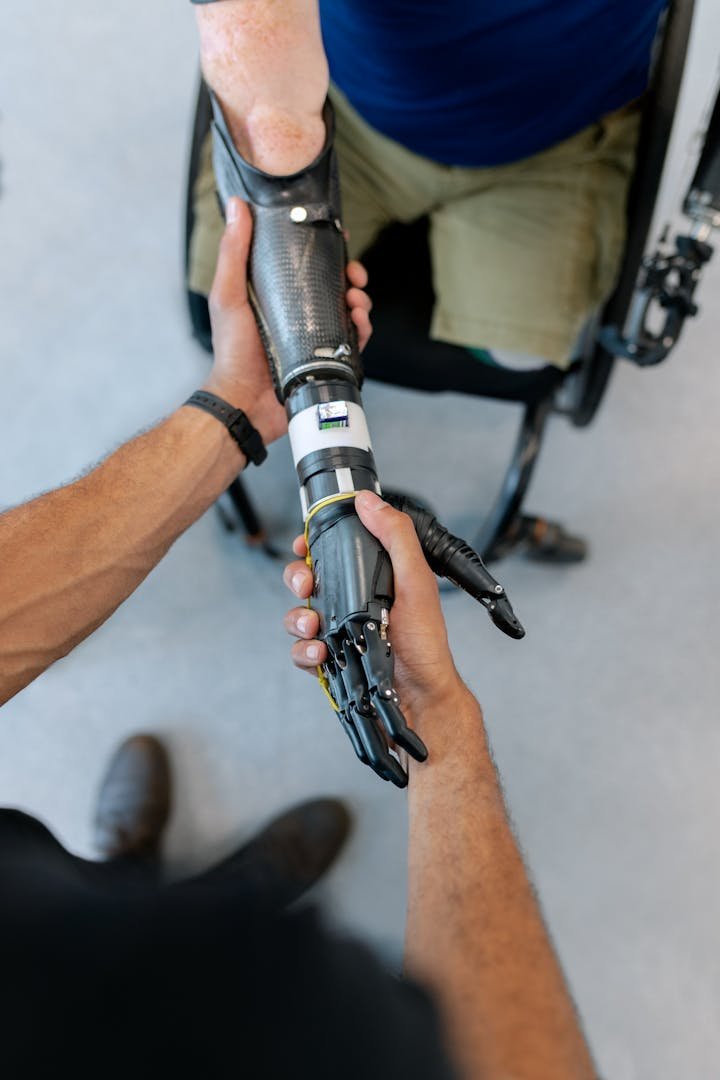
Consumer electronics enclosures requiring EMI shielding, thermal management, drop test survival, and IP-rated sealing. Industrial equipment housings designed for vibration resistance, chemical splash protection, and NEMA-rated environmental sealing. Medical device housings requiring biocompatible materials, sterilization-compatible geometry, and FDA design control documentation. Automotive components meeting IATF 16949 quality standards, PPAP documentation requirements, and environmental testing protocols for thermal cycling, salt spray, and UV exposure. Agricultural equipment parts designed for outdoor exposure, soil abrasion resistance, and field serviceability with basic hand tools.
Each industry vertical carries specific mechanical product design standards, regulatory requirements, and manufacturing expectations that generalist CAD modelers rarely understand deeply enough to apply correctly. Our project portfolio at minicad.io spans all five verticals, giving us cross-industry pattern recognition that pure specialists lack — we apply thermal management solutions proven in industrial electronics to consumer product enclosures, and adapt automotive vibration-resistant mounting concepts to marine electronics housings, producing better solutions through cross-pollination of proven engineering approaches across industry boundaries. A thermal management technique validated in thousands of industrial enclosures can solve an overheating problem in a consumer electronics product that a consumer-only specialist has never encountered and would need to research from scratch. A vibration-resistant mounting strategy developed for automotive applications can prevent the fastener loosening that plagues marine electronics installations exposed to engine vibration and wave impact. This cross-industry pattern library is invisible to clients during the quoting phase but manifests as faster design convergence, fewer prototype iterations, and more robust final solutions than single-vertical specialists typically deliver.
Documentation Standards That Manufacturers Actually Require
Professional mechanical design services deliverables extend far beyond the 3D model file. Technical drawings must follow either ASME Y14.5 (North American standard) or ISO 1101 (international standard) with proper GD&T symbology that communicates form, orientation, location, and runout requirements in the universal language every machine shop and quality inspection facility understands regardless of geographic location. The drawing title block must specify the applicable standard, projection angle convention (first or third angle), unit system (millimeters or inches), general tolerance class (ISO 2768-mK is standard for precision mechanical parts), and default surface finish — information that eliminates interpretation ambiguity when the drawing crosses borders between manufacturing facilities using different default conventions.
FEA analysis reports should document the mesh quality metrics (element aspect ratio, Jacobian ratio, convergence study results), boundary conditions applied (fixed supports, applied loads, contact definitions between mating surfaces), material model used (linear elastic for metals under yield, elastoplastic for ductile failure analysis, hyperelastic for rubber and silicone components), and safety factor calculations against the applicable failure criterion (von Mises for ductile metals, maximum principal stress for brittle materials, fatigue life for cyclically loaded components). A report that shows only a colorful stress contour plot without documenting these underlying parameters is marketing material, not engineering analysis — the results could be meaningless if the mesh is too coarse, the boundary conditions are unrealistic, or convergence was never achieved. Every FEA report from our mechanical cad design team includes full documentation of all analysis parameters so the results can be independently reviewed, reproduced, and extended by any qualified engineer using any FEA software platform.
Material specification documents should reference standard designations (ASTM A36, EN AW-6061-T6, JIS SUS304) rather than generic descriptions like “aluminum” or “stainless steel.” The mechanical property difference between Aluminum 6061-T6 (276 MPa yield) and Aluminum 7075-T6 (503 MPa yield) is an 82 percent increase in strength — information that determines whether your bracket survives the design load with a comfortable safety factor or fails unexpectedly in service. Our material specification deliverables include the standard designation, specific property values relevant to the application (yield strength, ultimate tensile strength, elongation at break, hardness, thermal conductivity, coefficient of thermal expansion), and sourcing recommendations identifying suppliers who stock the material in the required form (sheet, bar, tube, extrusion, pellet) at the quantities your production volume requires.
Prototyping and Testing Mechanical Designs Before Production
Mechanical parts under structural load must be prototyped and physically tested before production tooling investment regardless of how confident the FEA results appear on screen. Simulation predicts stress distribution in idealized geometry with perfect homogeneous material properties — real parts have manufacturing variations, surface defects, residual stresses from processing, and material property scatter that simulation cannot capture without extensive (and expensive) probabilistic analysis. A physical load test on a 3D-printed prototype costs $20 to $100 in material and a few hours of testing time. Discovering a failure mode in production after tooling investment costs $5,000 to $50,000 in tooling modification, production delays, and potential field recalls.
Our mechanical engineering design workflow includes test protocol recommendations for every load-bearing deliverable. The protocol specifies the loads to apply (magnitude, direction, duration, cycle count), the pass/fail criteria (maximum deflection, no visible cracking, no permanent deformation after load removal), the measurement method (calipers for deflection, visual inspection for cracking, weight measurement for material loss in wear tests), and the sample size (minimum 3 parts for statistical relevance in critical applications, single part acceptable for non-safety-critical proof-of-concept validation). These protocols transform prototype testing from an ad-hoc “see if it breaks” exercise into a structured engineering validation that produces quantitative data supporting production commitment decisions.
Pricing for Mechanical Design Services
Single-part mechanical design with FEA validation costs $69 to $174. Multi-part mechanism design with motion analysis and tolerance stack-up costs $300 to $800. Complete mechanical product design from concept through production-ready drawing packages with DFM review costs $800 to $3,000+ depending on component count and analysis depth. Hourly billing for open-ended mechanical engineering consultation runs $35 to $75 per hour. All project prices at minicad.io include native SolidWorks files, STEP, STL, technical drawings, and analysis documentation as standard deliverables.

Explore real examples of this work in our portfolio — see our custom nozzle diffuser manifold design and custom brackets and mounts in SolidWorks projects. Need professional engineering support? Our SolidWorks modeling service and STL file design service deliver production-ready files in 24 hours.
Get Professional Mechanical Engineering Design
Products that must survive real-world loads need more than geometry — they need engineering. Stress analysis, tolerance management, material optimization, and manufacturing process awareness are the invisible infrastructure that directly determines whether your product performs reliably under real-world conditions for years of continuous service or fails unexpectedly in the field within months of customer deployment. With 7,000+ projects delivered across 40+ countries, a 4.9-star rating from 4,470+ verified reviews, and engineering depth spanning FEA simulation, mechanism design, thermal management, and multi-process DFM optimization, our team at minicad.io delivers the mechanical design services that serious product development demands. Get a free quote and put real, verified engineering analysis and manufacturing expertise behind your next physical product development.