
Photo: cottonbro / Pexels
Here’s a pattern I see at least twice a month.
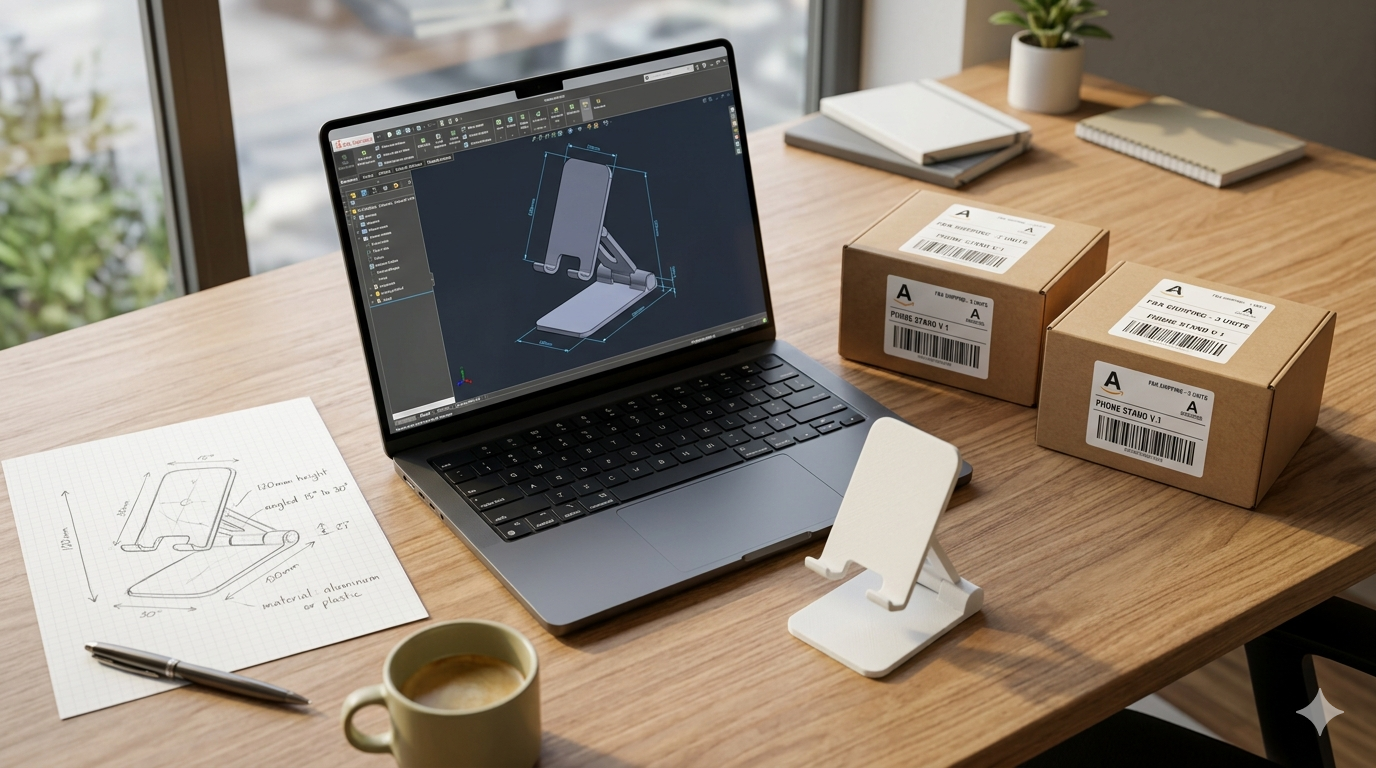
Someone finds a product opportunity on Amazon. Kitchen gadget, phone accessory, pet tool — doesn’t matter. They’ve done the market research. They’ve found three suppliers on Alibaba. They send the supplier a sketch or a photo with a message that says: “Can you make this?”
The supplier says yes. Quotes a price. The seller wires money for a sample mold.
The sample arrives six weeks later. It’s… not right. The wall is too thin in one spot. The snap-fit doesn’t snap. The logo pocket is 2mm off. The seller sends revision notes. Another sample. Another six weeks. Another $800 in mold modifications.
This cycle repeats two or three times. By the time the product is correct, the seller has burned $3,000–$5,000 and four months — on a product that should have cost $1,500 and taken six weeks.
The problem isn’t the factory. The problem is that the seller skipped the CAD step.
What Happens When You Send a Sketch to a Factory
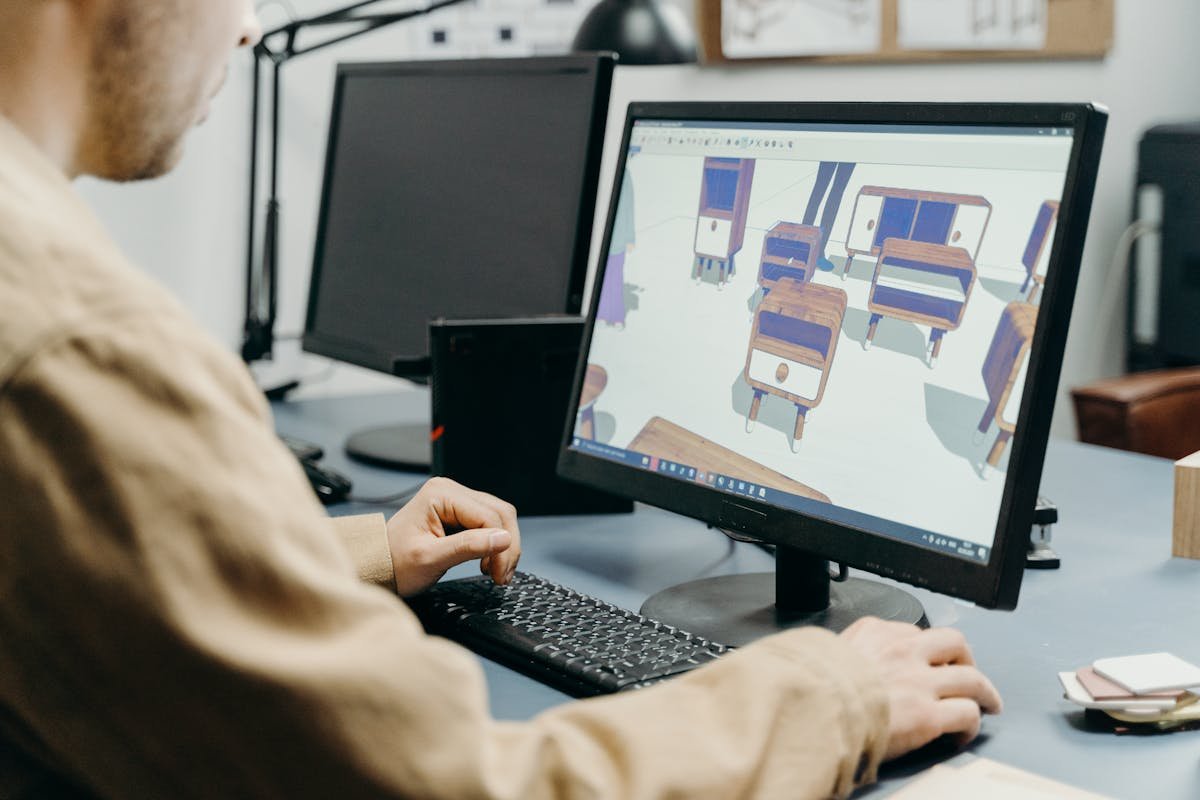
When a Chinese manufacturer receives your rough sketch, they don’t hand it to a senior engineer for careful interpretation. They hand it to a junior draftsman who turns it into a 3D model as cheaply and quickly as possible. The draftsman hasn’t used your product. They don’t know your market. They don’t know that the clip needs to survive 5,000 open-close cycles or that the thickness at the hinge point matters.
They model exactly what they see in the sketch. And your sketch — no offense — is missing 80% of the engineering information a mold maker needs.
The result: a mold that produces a part that sort of looks like your idea but doesn’t function like your vision. And mold modifications are expensive. Every change to a steel injection mold costs $200–$1,500 depending on complexity.
What Happens When You Send a Professional CAD File
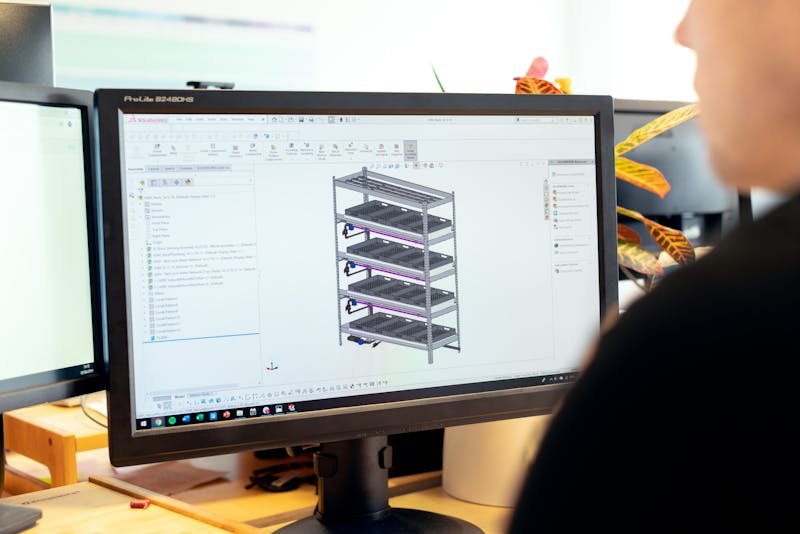
Photo: ThisIsEngineering / Pexels
When a manufacturer receives a SolidWorks file with a dimensioned 2D drawing, everything changes:
- No interpretation needed. Every dimension, radius, wall thickness, and clearance is defined. The mold maker doesn’t guess — they build exactly what the file specifies.
- Accurate quoting. The factory calculates material volume, mold complexity, and cycle time directly from the 3D model. No “ballpark estimate” — a real number.
- Draft angles are already there. A CAD engineer who knows injection molding builds 1°–3° draft into every vertical face. The factory doesn’t have to add them and potentially change your product’s appearance.
- First sample is closer to final. Instead of 3–4 sample rounds, you get 1–2. Each avoided sample round saves $500–$1,500 and 4–6 weeks.
The Math That Makes This Obvious
| Approach | CAD Cost | Mold Revisions | Total Cost | Time to Market |
|---|---|---|---|---|
| Sketch → Factory directly | $0 | $2,000–$4,500 | $2,000–$4,500 | 16–24 weeks |
| Sketch → Professional CAD → Factory | $65–$120 | $0–$500 | $65–$620 | 6–10 weeks |
A $65–$120 CAD investment saves $2,000–$4,000 in mold revisions. Not every time — but often enough that every experienced FBA seller learns this lesson. Some learn it from reading articles like this one. Most learn it from the $4,000 invoice.
What Your CAD File Needs for Manufacturing
For an injection-molded product (which is most Amazon FBA products), your CAD package should include:
- SolidWorks 3D model (.SLDPRT) with draft angles, uniform wall thickness, and proper fillet radii already applied
- STEP file (.STP) as a universal backup the factory can always open
- 2D engineering drawing (PDF) with overall dimensions, critical tolerances, and material specification
- Wall thickness noted — typically 1.5–3mm for injection-molded consumer products
- Surface finish requirements — textured (SPI-D), matte (SPI-C), or polished (SPI-A)
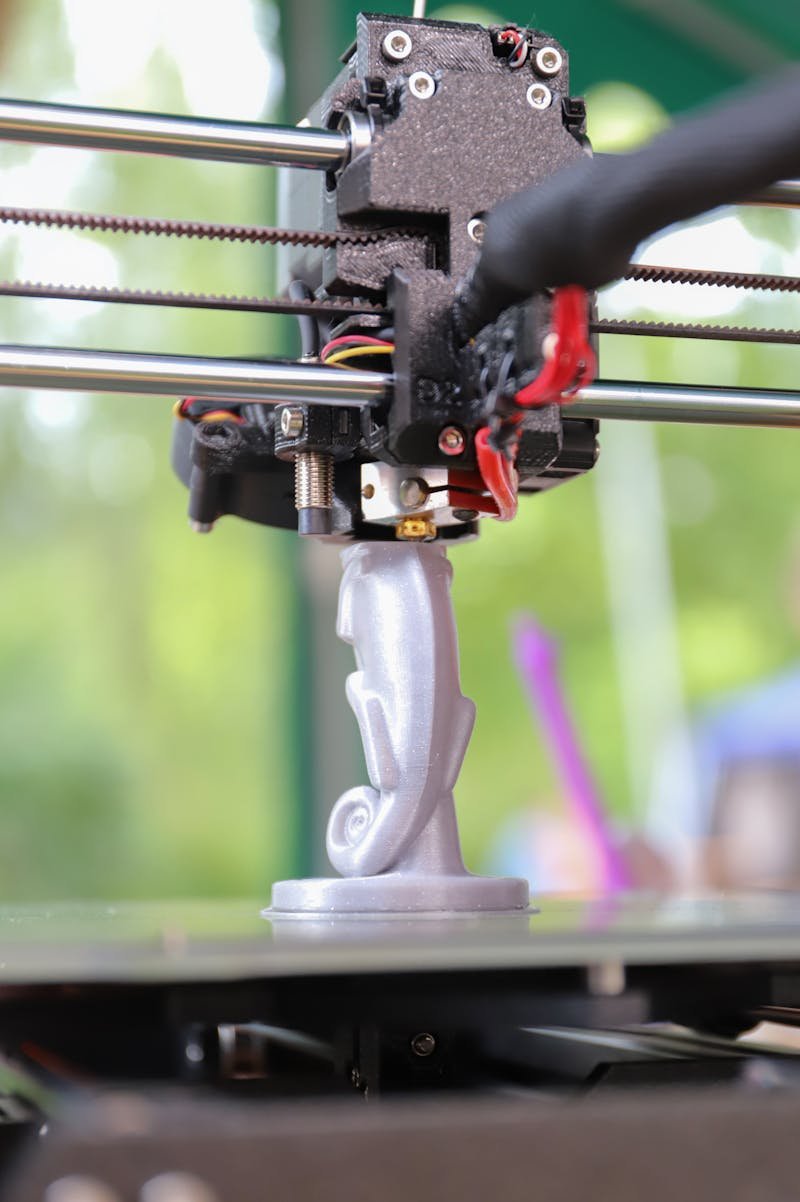
Photo: Lucie Siegelsteinova / Pexels
Pro Tip: 3D Print Before You Mold
Once you have the CAD file, 3D print a prototype before committing to tooling. A $10 FDM print lets you hold the product, test the ergonomics, check the proportions, and show it to potential customers — all before spending $1,500+ on a steel mold.
This is the cheapest product validation you’ll ever do. Many of my clients print 2–3 prototype iterations before finalizing the design for manufacturing. Each iteration costs $10–$30 in printing and $0–$35 in CAD revisions. Compare that to $800 per mold revision.
See how we apply these principles in real projects — explore our custom NFC keychain multi-color 3D print and custom brackets and mounts designed in SolidWorks portfolio examples. Ready to start your own project? Check out our product rendering service and prototype design service for professional SolidWorks engineering delivered in 24 hours.
The Timeline That Actually Works
- Week 1: Send sketch/photos to a CAD engineer. Receive SolidWorks model + 2D drawing. ($65–$120)
- Week 2: 3D print prototype. Test. Request one round of revisions if needed. ($10–$35)
- Week 3: Send final CAD files to 3–5 manufacturers for quoting.
- Week 4–5: Select manufacturer. Approve quote. Wire mold deposit.
- Week 6–8: Mold fabrication + first sample.
- Week 9: Approve sample (first try — because the CAD was right).
- Week 10: Production run begins.
Ten weeks from sketch to production. That’s the version where you invest $120 in CAD upfront. The version where you skip CAD takes 24 weeks and costs $4,000 more. Your call.
Launching a product? Start with the right CAD file.
MiniCAD designs manufacturing-ready files that factories accept without questions. Save months and thousands.
4,470+ reviews · 4.9★ rating · 24-hour delivery available
{
“@context”: “https://schema.org”,
“@type”: “Article”,
“headline”: “From Amazon FBA Idea to Manufactured Product: The CAD Step Nobody Talks About”,
“description”: “Why skipping professional CAD design costs Amazon FBA sellers thousands in mold revisions — and how a $65-$120 investment saves months and money.”,
“author”: {“@type”: “Person”, “name”: “Loay”, “url”: “https://minicad.io”},
“publisher”: {“@type”: “Organization”, “name”: “MiniCAD”, “url”: “https://minicad.io”},
“datePublished”: “2026-03-19”,
“image”: “https://minicad.io/wp-content/uploads/2026/03/amazon-fba-product-design-cad-1.jpg”,
“mainEntityOfPage”: “https://minicad.io/blog/amazon-fba-product-design-cad”
}