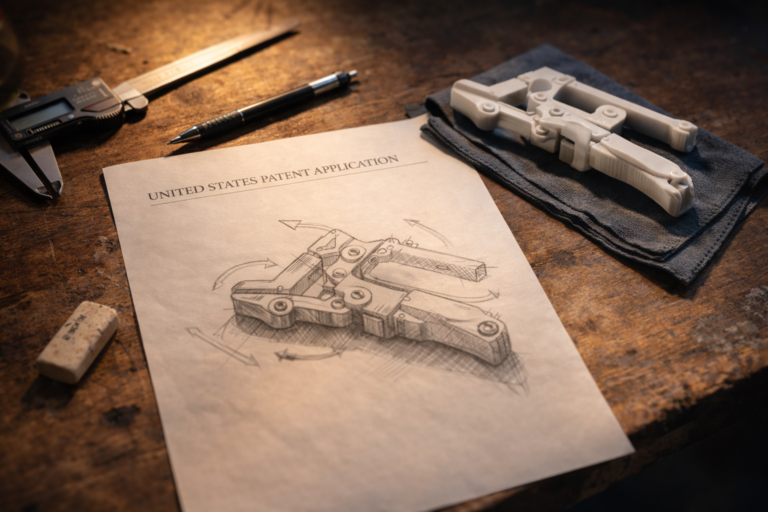
Selling a physical product online without professional visuals is like pitching in a dark room — your audience cannot see what you are offering. A product rendering service creates photorealistic 3D images of your product that match or exceed the quality of traditional studio photography, at a fraction of the cost, without requiring a physical sample to exist. For Amazon FBA sellers, Kickstarter creators, Shopify store owners, and product companies launching new SKUs, photorealistic rendering has become the standard for listing imagery, marketing materials, and investor presentations because it delivers better results faster and cheaper than any photographic alternative.
What a Product Rendering Service Delivers
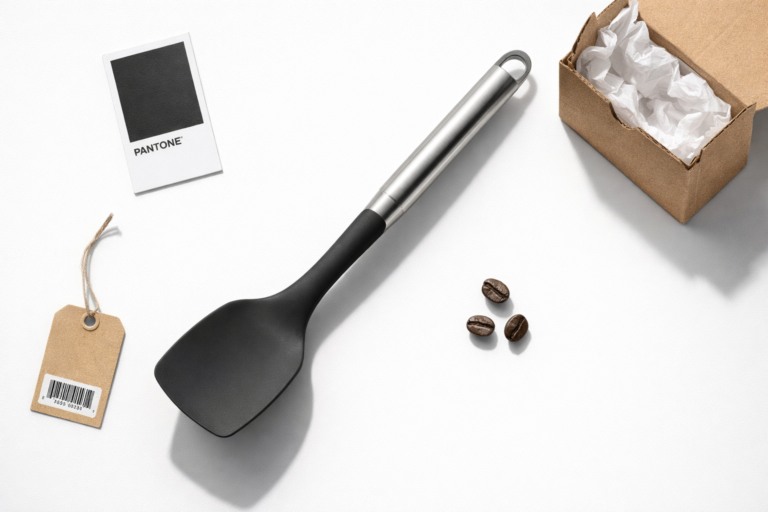
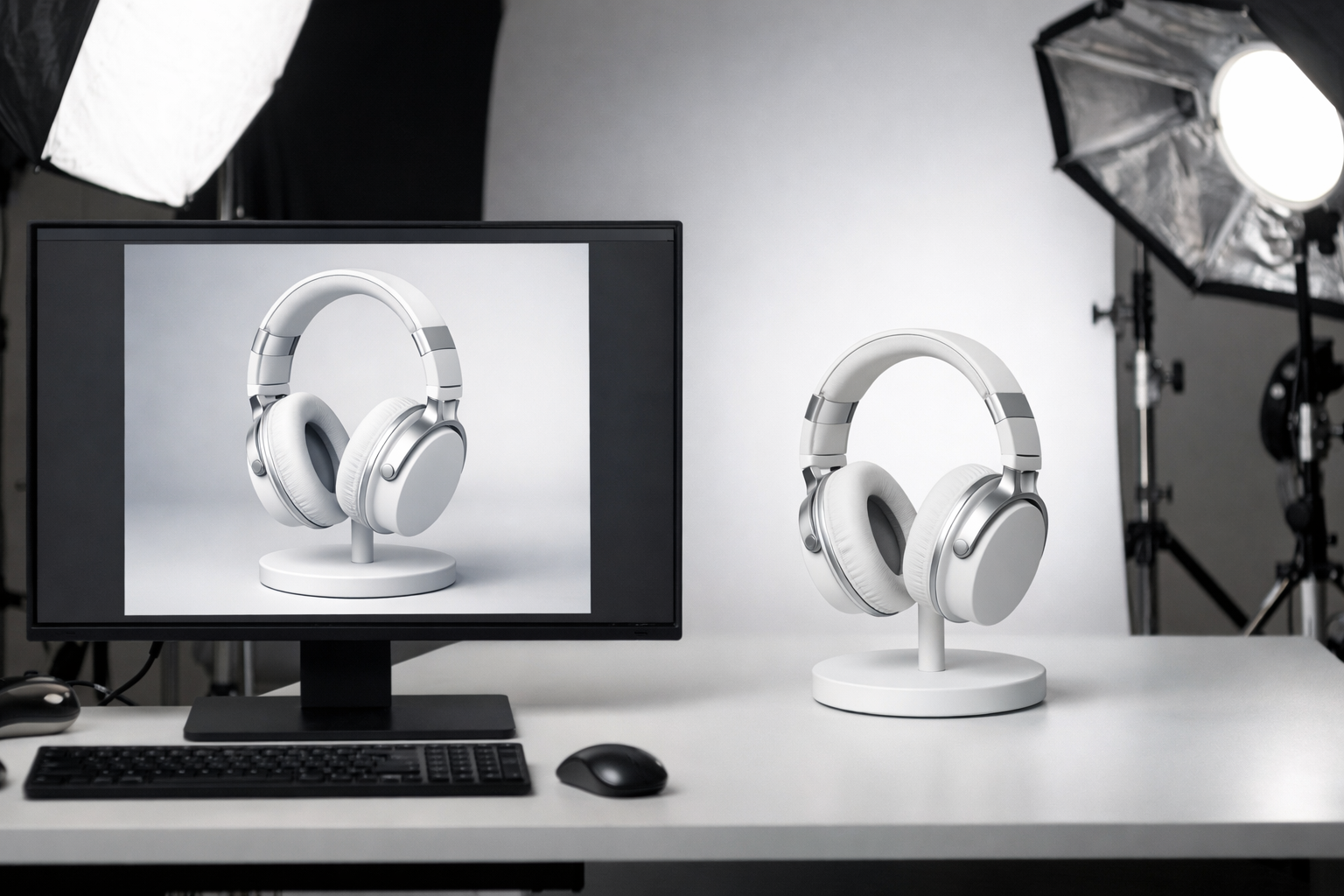
A professional 3d product visualization service produces several categories of visual output from your SolidWorks CAD model. Hero images show the product on a clean white or gradient background — the primary listing image that Amazon, Shopify, and Walmart marketplace policies require. Lifestyle renders place the product in a realistic context — a kitchen tool on a marble countertop, an electronics device on a modern desk, a fitness product in a gym setting — creating emotional connection and scale reference that isolated product shots cannot achieve.
Exploded view renders separate the product into individual components arranged along assembly vectors, revealing internal construction quality and engineering sophistication that builds buyer confidence in products with premium pricing. Infographic base renders provide clean, dimensionally accurate product images with empty space for text overlays, callout lines, and specification labels that your graphic designer adds during listing optimization. Cut-away renders show internal features — PCB placement, motor location, battery compartment, cooling channels — that differentiate your product from competitors who cannot show what is inside because they lack the engineering data to render it accurately.
Each render type serves a specific conversion function in the buyer’s decision journey. The hero image earns the click. The lifestyle render establishes emotional relevance and use-case clarity. The exploded view justifies the price by demonstrating construction quality. The infographic communicates specifications that logical buyers need before adding to cart. A complete product render cad package covering all four types typically includes 6 to 10 individual renders at 3000 by 3000 pixel resolution — sufficient for Amazon’s image requirements, social media posts, and print marketing materials up to poster size.
Why Photorealistic Rendering Outperforms Product Photography
Traditional product photography requires a physical sample (lead time: weeks to months for production samples), a studio session ($200 to $1,000 per session), a photographer ($50 to $150 per hour), and post-processing editing ($50 to $200 per image). The total cost for a 7-image Amazon listing package through traditional photography ranges from $500 to $2,000, and every product variation (color, size, finish) requires a separate physical sample and a separate session multiplying that cost linearly.
Photorealistic rendering from a CAD model requires no physical sample — renders can be produced while the product is still in the tooling or prototyping phase, enabling pre-launch marketing campaigns, investor pitch decks, and crowdfunding pages months before the first production unit ships. A 7-image rendering package costs $150 to $500, and every color or material variation costs only $20 to $50 additional because the geometry and lighting are already configured — only the material properties change. For a product sold in 5 colors, rendering saves $2,000 to $8,000 compared to photographing 5 physical samples.
Rendering also provides perfect repeatability. Every image uses identical lighting, camera angle, and background — eliminating the shot-to-shot variation that makes multi-SKU product lines look inconsistent when photographed across different studio sessions, photographers, or seasons. The consistency advantage compounds across product lines: a brand with 30 SKUs all rendered with the same virtual studio setup communicates professional cohesion that builds trust with quality-conscious buyers browsing category pages where visual consistency signals brand investment and attention to detail.
The Rendering Process from CAD Model to Final Image
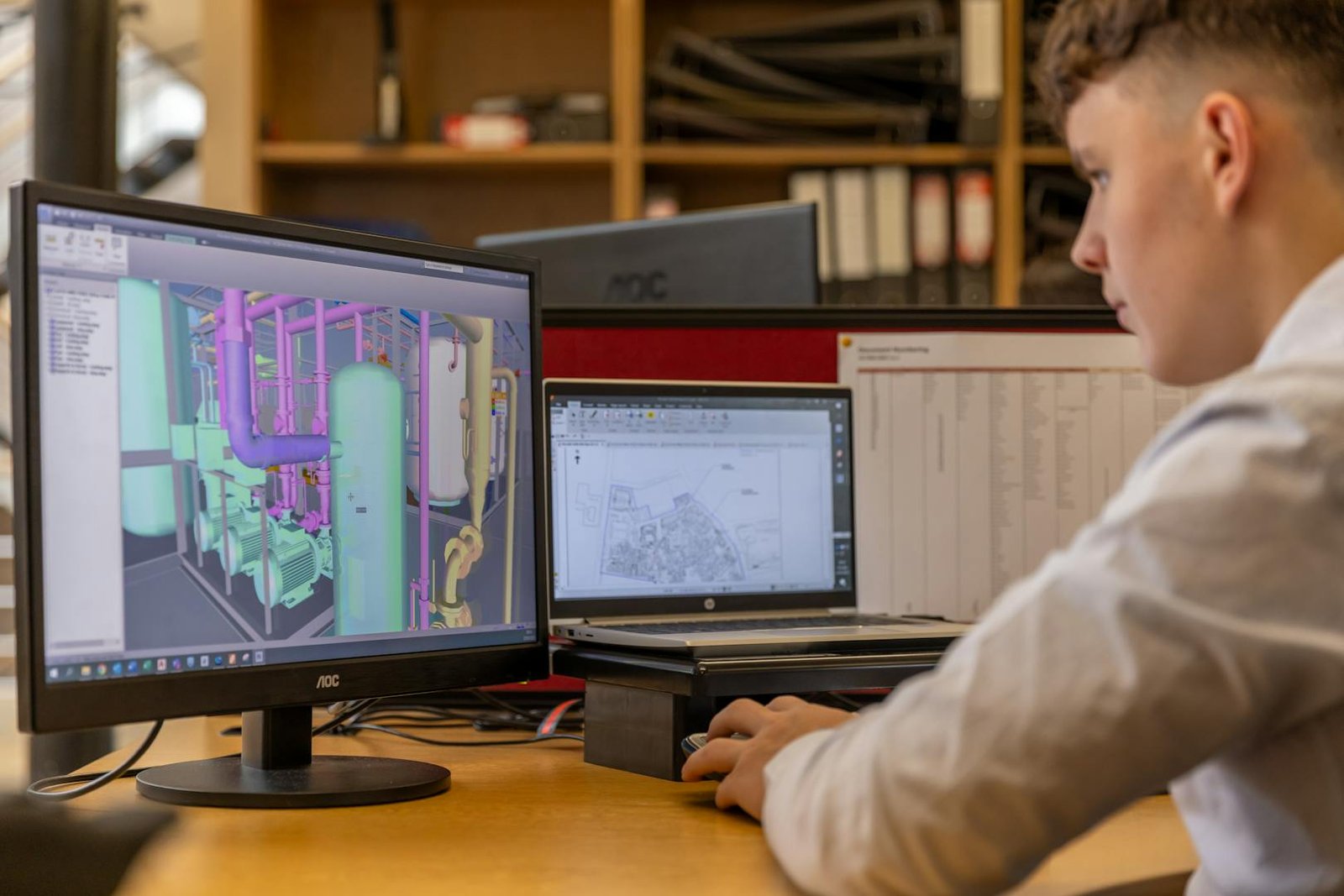
The workflow begins with your SolidWorks CAD model — either one we created or one you provide from another source. We import the geometry into visualization software (SolidWorks Visualize or KeyShot, depending on the rendering complexity and output requirements), then apply materials, textures, and physical properties to every surface. Aluminum gets a brushed or anodized texture with accurate reflectivity values. Plastic surfaces receive the correct color, gloss level, and surface texture (matte, satin, high-gloss, soft-touch). Rubber and silicone components get material-accurate translucency, shore hardness visual cues, and correct edge behavior where soft materials meet rigid ones in assembly.
Lighting setup uses physically-based HDR environment maps that simulate real-world lighting conditions — studio softbox arrays for clean commercial shots, outdoor HDRI for lifestyle context, or architectural interiors for in-context usage scenes. Camera positioning follows established product photography composition rules: 30-degree elevated angle for hero shots, eye-level for lifestyle context, and top-down for flat-lay arrangements. Depth of field is calibrated to match full-frame camera behavior, creating natural bokeh on background elements that directs viewer attention to the product without the artificial look that over-sharpened renders sometimes produce.
Final output is rendered at 3000 by 3000 pixels minimum (Amazon’s recommended listing image resolution), delivered in PNG format with transparent background for hero images and JPEG format for lifestyle and context renders. Each image undergoes color calibration to ensure accurate reproduction across different display technologies — the blue on your product looks the same on an iPhone screen, a Dell monitor, and an Amazon Fire tablet. This calibration step prevents the common complaint of “the product looks different in person than on the listing” that drives returns and negative reviews.
Amazon-Specific Rendering Requirements
Amazon enforces specific image technical requirements and content policies that your 3d render for ecommerce images must satisfy. The main listing image must show only the product on a pure white background (RGB 255, 255, 255), with the product filling 85 percent or more of the frame. No text, no logos, no watermarks, no additional objects that are not included in the purchase. Secondary images allow lifestyle context, infographic overlays, and comparison charts, but must maintain a minimum 1000 pixel dimension on the longest side for zoom functionality and a maximum 10,000 pixel dimension per Amazon’s upload limits.
Our product rendering service produces Amazon-compliant images by default — white background hero images are rendered with pixel-perfect RGB 255,255,255 backgrounds that pass Amazon’s automated image quality checks without manual editing. Lifestyle renders are composed at resolutions that allow both full-bleed display and zoom-crop functionality. We also provide the source PSD or PNG files with transparent backgrounds so your listing optimization team or graphic designer can add text overlays, callout annotations, and comparison tables without needing to re-render or manually mask the product from its background.
Rendering for Kickstarter and Crowdfunding Campaigns
Crowdfunding campaigns live or die on visual storytelling. Backers cannot physically examine your product before pledging — they evaluate the opportunity entirely through the images and video on your campaign page. Professional photorealistic rendering communicates three things that convert browsers into backers: production readiness (“this product is real and engineered, not just a concept”), quality positioning (“this is a premium product worth the pledge price”), and use-case clarity (“I can see exactly how this product improves my daily life”).
Campaign page renders differ from Amazon listing renders in style and purpose. Campaign hero images benefit from dramatic lighting, environmental context, and emotional staging that hero-shot product photography intentionally avoids. “The product in action” lifestyle renders showing human hands interacting with the product dramatically outperform isolated product-on-white shots in crowdfunding contexts because backers at the discovery stage need to understand what the product does before they care about what it looks like in detail. The Jungle Scout seller blog publishes data on how visual content quality correlates with crowdfunding conversion rates across product categories.
Product Animation and Turntable Videos
Static renders capture attention. Animated renders hold it. A 360-degree product turntable — a smooth 5 to 15 second video showing the product rotating on its vertical axis — provides the interactive inspection experience that online buyers cannot get from still images alone. Turntable animations reduce return rates by giving buyers complete visual information about every surface, every angle, and every detail before purchase. Amazon A+ Content, Shopify product pages, and social media advertising all support embedded video content, and turntable animations consistently outperform still images in click-through rate and time-on-page metrics across every ecommerce platform that tracks these engagement statistics.
Beyond simple turntables, exploded assembly animations show the product disassembling into individual components along logical assembly vectors — revealing construction quality, component count, and internal engineering sophistication that static exploded-view renders can only approximate. Feature highlight animations use camera motion to draw viewer attention to specific design elements — a slow zoom into a precision hinge mechanism, a pan across a textured grip surface, a cutaway reveal of internal cooling channels — telling a visual product story that no amount of listing copywriting can convey with equivalent emotional impact, spatial clarity, and long-term memorability in the viewer’s product evaluation memory.
Animation pricing scales with duration and complexity. A 5-second product turntable on white background costs $100 to $200. A 15-second feature highlight animation with multiple camera moves and material transitions costs $200 to $500. A 30 to 60 second product story video combining turntable, exploded view, feature highlights, and lifestyle context renders costs $500 to $1,500. All animations are delivered in MP4 format at 1080p or 4K resolution, suitable for direct upload to Amazon, Shopify, YouTube, Instagram, and TikTok without format conversion or re-encoding.
Batch Rendering for Product Line Consistency
Brands with 10 to 50 SKUs face a visual consistency challenge that individual per-product rendering cannot solve efficiently. Each product photographed or rendered separately — with different lighting, camera angles, and background treatments — creates a catalog that looks fragmented on category pages and brand storefronts where visual cohesion communicates brand professionalism and trust. Batch rendering solves this by establishing a single virtual studio setup — lighting rig, camera position, background treatment, color calibration profile — and processing every SKU through the identical visual pipeline.
The result is a product catalog where every item shares the same lighting quality, shadow behavior, color temperature, and compositional proportions. Buyers browsing a category page perceive the brand as organized, professional, and detail-oriented — subconscious quality signals that influence purchase decisions independently of the product specifications themselves. Batch rendering also reduces per-image cost by 20 to 40 percent compared to individual rendering because the virtual studio setup, material library development, and lighting calibration are amortized across the full product line rather than duplicated for each SKU independently.
Our product rendering service handles batch rendering projects of any size — from 5-SKU specialty brands to 50-SKU product line expansions. Each batch project begins with a style definition phase where we establish the visual standard on 2 to 3 reference products, then apply that standard systematically across the remaining catalog. The style definition deliverable itself serves as a permanent brand visual guideline document for future product additions, ensuring that products launched 12 months later match the visual identity established during the initial batch without requiring re-establishment of lighting, material, and composition standards from scratch.
Pricing for Product Rendering Services
Single product hero renders on white background: $30 to $60 per image. Lifestyle context renders with environment and lighting setup: $50 to $100 per image. Exploded view or cutaway technical renders: $60 to $120 per image. Complete Amazon listing packages (7 to 10 images covering hero, lifestyle, infographic bases, and detail shots): $200 to $600. Complete Kickstarter campaign visual packages (15 to 20 images plus animated turntable GIF): $500 to $1,200. Color and material variation renders from an existing setup: $20 to $50 per variant.
These prices assume an existing SolidWorks CAD model — if modeling and rendering are combined in a single project, bundled pricing typically saves 15 to 25 percent compared to commissioning the CAD model and renders separately from different providers. Our pricing at minicad.io includes source files, two revision rounds per image, and commercial usage rights — you own the renders and can use them across any marketing channel without licensing restrictions, attribution requirements, per-use fees, or territorial usage limitations. You own the images outright and can use them on Amazon US, Amazon EU, Amazon Japan, your own website, social media advertising, print catalogs, trade show displays, and any other marketing channel without additional payment or permission requests.
Turnaround and Revision Process for Rendering Projects
Single hero renders deliver within 24 to 48 hours of model finalization. Complete listing packages with 7 to 10 images deliver within 3 to 5 business days. Campaign visual packages with 15 to 20 images and animation deliver within 5 to 10 business days. Each image includes two revision rounds covering camera angle adjustments, lighting modifications, material property changes, and background alterations. Revisions beyond the included rounds are billed per-image at a transparent rate quoted upfront in the project agreement.
The most efficient rendering workflow starts with a “mood board” conversation — you share 3 to 5 reference images showing the visual style, lighting mood, and composition approach you want, and we align on aesthetic direction before producing the first render. This upfront alignment typically eliminates one full revision round because the initial output already matches the client’s expectations in overall tone and style, with revisions focused on fine-tuning specific details rather than fundamental direction changes that require re-rendering entire scenes from scratch — a costly scenario that typically adds 3 to 5 business days and 30 to 50 percent to the total project cost when it occurs.
Return on Investment — Why Rendering Pays for Itself
The ROI calculation for professional product rendering service investment is straightforward. A complete 7-image Amazon listing package costs $200 to $600 to render. That listing generates revenue for years — a successful FBA product listing with professional visuals typically earns $500 to $5,000 per month in gross revenue depending on category and pricing. The rendering investment pays for itself within the first week of sales for any product that achieves even modest daily unit velocity. Compare this to the alternative: launching with smartphone photos that generate 30 percent lower click-through rates, 20 percent lower conversion rates, and correspondingly lower revenue per day for the entire lifetime the product remains listed.
For Kickstarter campaigns, the visual quality correlation with funding success is even more direct. Campaigns with professional rendering consistently achieve 2 to 3 times higher pledge totals than campaigns with amateur visuals in the same product category and price range — a difference that frequently exceeds $50,000 in total funding for consumer product campaigns. The $500 to $1,200 rendering investment for a complete campaign visual package generates returns of 50 to 100 times the input cost when the campaign succeeds, making rendering one of the highest-ROI pre-launch investments available to hardware crowdfunding creators.
Explore real examples of this work in our portfolio — see our custom NFC keychain multi-color print and custom nozzle diffuser manifold design projects. Need professional engineering support? Our technical drawing service and product rendering service deliver production-ready files in 24 hours.
Get Professional Product Renders from Your CAD Model
Your product deserves visuals that match its engineering quality. Professional photorealistic rendering creates the listing images, campaign visuals, and marketing materials that convert browsers into buyers — without requiring physical samples, studio sessions, or photographer coordination. With 7,000+ projects delivered, a 4.9-star verified rating, and experience producing renders for Amazon, Kickstarter, Shopify, and direct-to-consumer brands across consumer electronics, kitchen, outdoor, and lifestyle product categories, our team at minicad.io delivers the product rendering service quality your brand deserves. Get a free quote and see your product in photorealistic detail before the first production unit exists.