Off-the-shelf parts solve standard problems. But when your application demands unique dimensions, proprietary mounting interfaces, or geometry that simply does not exist in any catalog, custom 3d printing design is the fastest path from concept to physical part. Unlike injection molding or CNC machining, 3D printing carries no tooling cost — making it economically viable to produce one unique part, ten prototype variants, or five hundred production units using the same digital file and the exact same digital manufacturing process without needing to amortize expensive tooling across the production run. This guide covers everything you need to know about commissioning, evaluating, and getting maximum value from custom 3D printed part design.
What Custom 3D Printing Design Actually Involves
A bespoke 3d print design project starts with your specific requirements — dimensions that must match a particular mating component, features that serve a unique functional purpose, and constraints imposed by your operating environment (temperature, moisture, UV exposure, chemical contact, mechanical loads). The designer builds a fully parametric SolidWorks model tailored to those exact requirements, optimizes the geometry for your chosen 3D printing process and material, and exports print-ready files with orientation guidance and settings recommendations included.
The distinction between custom 3d printing design and downloading a generic STL from a model repository is total design control. A downloaded model was designed for someone else’s specific requirements, exact dimensions, preferred material, and particular printer model — none of which are likely to match yours precisely. A custom model is designed for your exact specific application starting from a completely blank canvas — every wall thickness calculated for your load case, every tolerance compensated for your chosen printer and filament, every feature shaped to serve your functional requirement rather than someone else’s approximation of a similar need.
This level of specificity matters for any part where fit, function, or reliability affects the outcome. A bracket that holds a sensor at exactly the right angle. An enclosure that fits a specific PCB with exact cutout positions for every connector. A jig that aligns components during assembly with repeatable precision across hundreds of production cycles. These applications demand custom geometry designed around your specific dimensional requirements that no generic community download can provide without extensive modification that often takes longer than building from scratch.
Designing for the Right Printing Process
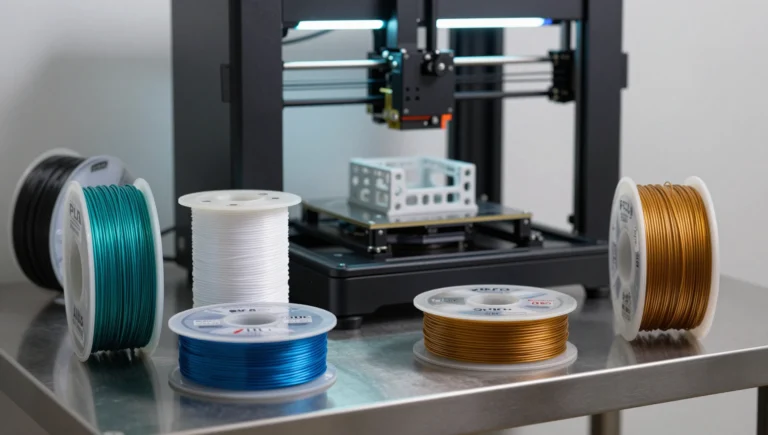
FDM (Fused Deposition Modeling) is the most accessible and affordable custom 3d model printing process for functional parts. Material options include PLA for non-structural prototypes, PETG for functional parts with moderate heat and chemical resistance, ABS for impact-resistant housings, Nylon for wear-resistant mechanisms, and carbon-fiber composites for lightweight structural components. Design constraints include minimum 1.2 mm wall thickness, 45-degree maximum unsupported overhang angle, and 0.3 mm clearance per side for mating surfaces.
SLA (Stereolithography) produces the smoothest surface finish and finest detail resolution among consumer-accessible processes. Custom designs for SLA must account for suction forces during peel (avoid large flat downward-facing surfaces), mandatory drainage holes for hollow sections (uncured resin trapped inside a sealed part is a safety hazard), and significant post-processing shrinkage during UV final cure (typically 0.1 to 0.2 percent linear). The Formlabs engineering blog maintains detailed SLA design guidelines by resin formulation that we reference for every resin-based custom project.
SLS (Selective Laser Sintering) uses nylon powder that requires no support structures at all — the surrounding powder bed provides complete self-support during the build. This unlocks geometries impossible on FDM or SLA: interlocking chain links printed as a single assembly, internal lattice structures for weight optimization, snap-fit mechanisms with built-in spring deflection, and complex fluid manifolds with smooth internal channels. The design trade-offs are lower dimensional accuracy (plus or minus 0.3 mm typical) and a characteristically grainy surface texture that requires post-processing for cosmetic applications.
Material Selection for Custom Printed Parts
Material choice determines every downstream design parameter — wall thickness, tolerance compensation, maximum operating temperature, chemical compatibility, and UV stability. For tailored 3d printing projects, we guide clients through material selection based on four criteria: mechanical requirements (strength, stiffness, impact resistance), environmental exposure (temperature range, moisture, chemicals, sunlight), surface requirements (cosmetic finish, paintability, food contact safety), and cost sensitivity (material price per gram multiplied by part volume plus print time cost).
PLA costs approximately $20 to $25 per kilogram and prints easily but softens at 55 degrees Celsius — unsuitable for any application involving heat. PETG costs $25 to $30 per kilogram, handles temperatures up to 75 degrees, and resists most household chemicals. ABS costs $20 to $25 per kilogram, handles 95 degrees Celsius, but requires an enclosed printer chamber to prevent warping during printing. Nylon costs $40 to $60 per kilogram, handles continuous loads with excellent fatigue resistance, but absorbs atmospheric moisture that changes dimensions by 0.5 to 1.5 percent over weeks if not sealed or stored in dry conditions.
For clients uncertain about material selection, we offer a comparative test print service — producing the same custom design in two or three candidate materials so you can physically compare strength, flexibility, surface quality, and weight before committing to a material choice for production quantities. This $50 to $100 test prevents the much more expensive mistake of discovering the wrong material was chosen after ordering 500 units from a service bureau.
Tolerance Specifications for Custom Printed Parts
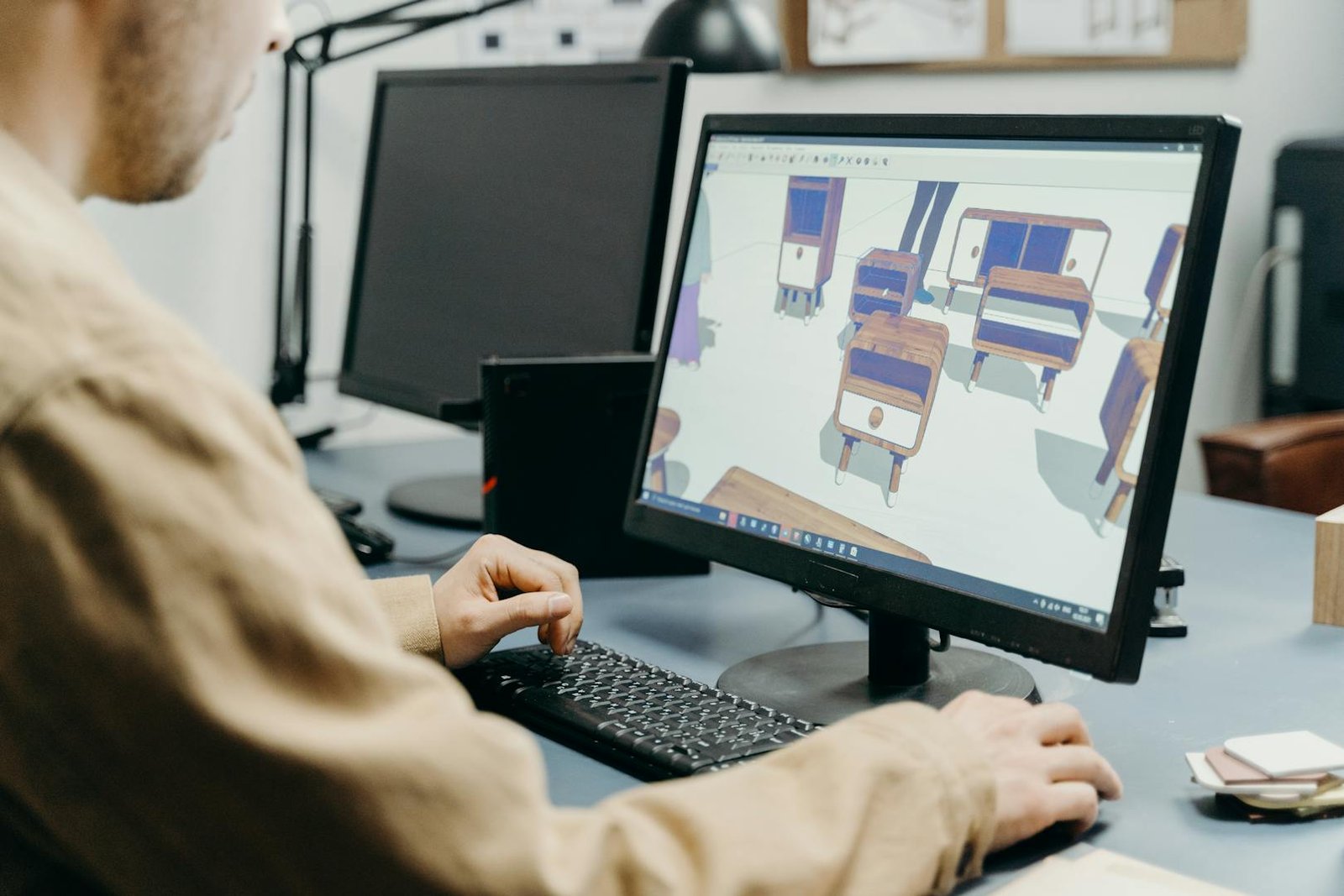
Dimensional accuracy varies significantly across printing processes and materials. FDM typically achieves plus or minus 0.2 mm on well-calibrated machines for features under 100 mm, with accuracy degrading on larger parts due to thermal warping effects. SLA achieves plus or minus 0.1 mm for parts within the build volume sweet spot (central 60 percent of the platform). SLS achieves plus or minus 0.3 mm due to powder sintering unpredictability and post-build thermal contraction during cooling.
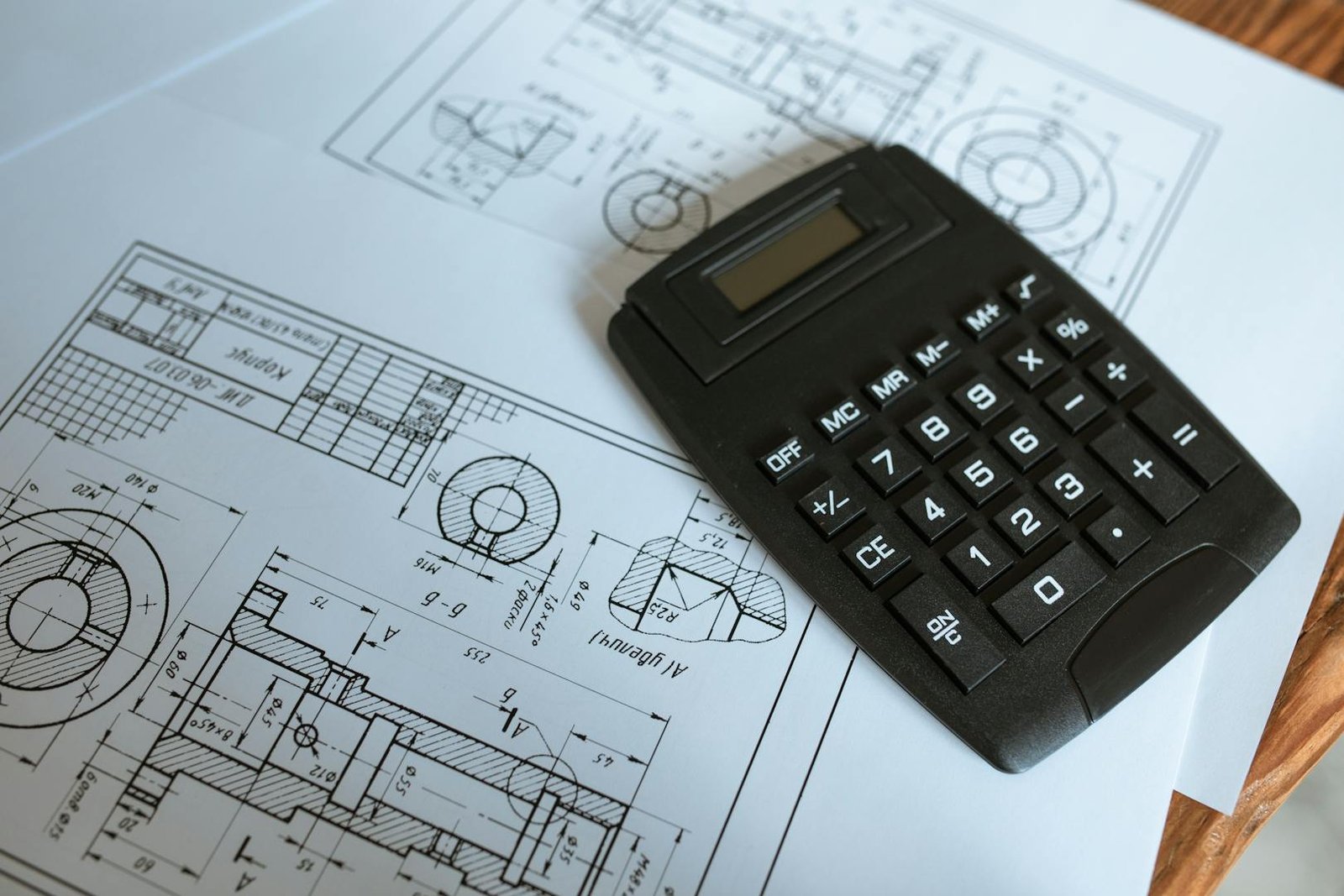
For custom 3d printing design projects where mating surfaces must fit with specific clearances, we apply process-specific tolerance compensation directly in the SolidWorks model rather than relying on slicer-level scaling or post-print machining. Holes are oversized by the empirically determined compensation value for each material and process combination. Shafts are undersized by the same factor. Mating surfaces include the appropriate clearance gap built into the nominal geometry so the printed part fits correctly without manual filing, sanding, or shimming after printing.
Snap-Fit Joints and Assembly Features for Printed Parts
Snap-fit cantilever hooks are the most common assembly feature in custom 3d printing design because they eliminate separate fasteners, reduce BOM cost, and simplify assembly to a single push-click motion. The design parameters are beam length (longer beams deflect with less stress), beam thickness (thicker beams resist higher forces but require more deflection force), and deflection angle (the ramp that guides the hook past the retention ledge during assembly). For FDM-printed ABS, limit cantilever strain to 2 percent maximum. For PETG, limit to 1.5 percent. For PLA, limit to 1 percent because PLA is brittle under sustained deflection.
Print the snap-fit beam perpendicular to the layer lines whenever possible — a beam printed parallel to layers will delaminate at the layer bond before reaching the material’s bulk strain limit. If orientation constraints prevent perpendicular printing, reinforce the beam base with a generous fillet (minimum 1.5 mm radius) and increase beam thickness by 30 percent to compensate for the reduced inter-layer strength.
Surface Finishing Options for Custom Prints
FDM parts show visible layer lines at the printing layer height — 0.2 mm layers produce a texture with 0.2 mm step height on angled surfaces. For personalized 3d print projects where cosmetic quality matters, several post-processing techniques smooth the surface. Acetone vapor smoothing works on ABS, dissolving the outer layer slightly to create a glossy, smooth finish — but it rounds sharp edges and can obscure fine detail. Sanding through progressively finer grits (120, 240, 400, 800) works on any material but is labor-intensive on complex geometry. Filler primer spray followed by wet sanding produces paintable surfaces suitable for consumer product appearance prototypes.
SLA parts emerge from the printer with smooth surfaces that often need no finishing beyond support nub removal and a brief sanding pass. SLS nylon parts have a characteristically grainy texture from the powder sintering process — dyeing, media tumbling, or chemical vapor smoothing can improve cosmetics for customer-facing applications. We advise on finishing options during the design phase because some finishing techniques impose geometric constraints (vapor smoothing requires minimum 1.5 mm feature spacing to prevent adjacent features from fusing together during the chemical exposure). Finishing decisions made during the design phase — not as post-processing afterthoughts — produce significantly better cosmetic results because the geometry is shaped to support the finishing technique rather than working against it. Rounded edges smooth better than sharp ones. Uniform wall thickness dyes more evenly than variable walls. Vertical surfaces sand more easily than complex curved surfaces where sandpaper contact area varies with position.
Custom 3D Printing for Batch Production
3D printing is not just for prototypes — it is increasingly viable for production runs of 50 to 5,000 units where injection mold tooling costs ($5,000 to $50,000 or more) cannot be justified by the production volume. Multi-Jet Fusion (MJF) and SLS can produce hundreds of nylon parts per build at costs competitive with injection molding for quantities under 1,000 units. FDM print farms with 10 to 50 machines can produce 100 to 500 units per week of larger parts at predictable per-unit costs.
Designing for batch production introduces additional considerations beyond one-off prototyping. Part nesting efficiency (how many parts fit on a single build plate), print time per unit (drives labor and machine amortization cost), post-processing consistency (ensuring every unit meets the same quality standard), and dimensional inspection sampling (verifying tolerance compliance across the batch). Our custom 3d printing design service includes production-readiness assessment for clients planning batch quantities, covering per-unit cost estimates, process selection recommendations, and quality control checkpoint definitions. This production-readiness assessment transforms a prototype design into a comprehensive manufacturing specification document that print service bureaus can quote, produce, and quality-control without ambiguity about expectations, tolerances, or acceptance criteria. Clients who skip this step typically experience 15 to 25 percent reject rates on their first batch order — rejects that cost money, waste time, and damage the relationship with their manufacturing partner. Clients who complete the assessment before ordering typically see reject rates below 3 percent because every dimensional requirement, cosmetic standard, and functional test criterion is documented in advance.
Prototyping Strategy for Custom Printed Parts
A single custom 3d printing design rarely emerges perfect on the first iteration. Professional prototyping follows a structured three-phase approach. Phase one is a concept prototype — a quick, rough print (0.3 mm layer height, 15 percent infill) that validates overall dimensions, basic form factor, and spatial relationships between features. This print costs $2 to $5 in material, takes 1 to 3 hours, and answers the question “does the basic shape work?” Spend no time on surface finish or cosmetic quality at this stage — you are testing geometry, not aesthetics.
Phase two is a functional prototype — a higher-quality print (0.2 mm layer height, 30 to 50 percent infill, proper material selection) that validates mechanical performance under real-world loads. Snap-fit engagement forces, thread engagement depth, seal compression behavior, and assembly sequence feasibility are all tested on physical parts in this phase. Any dimension that needs adjustment is modified in the parametric SolidWorks model and reprinted within hours. Phase three is a production-equivalent prototype — a final print (0.1 to 0.15 mm layer height, optimized orientation, post-processed surfaces) that represents the visual and functional quality of the production part. This prototype is suitable for customer feedback sessions, investor presentations, and photography for marketing materials.
Each phase costs progressively more in print time and material but addresses progressively finer design questions. Skipping directly to phase three wastes time and money when the phase-one geometry has fundamental issues that could have been caught with a quick rough print. Our bespoke 3d print design deliveries include phase-specific print setting recommendations so clients can follow this structured approach on their own printers, or we can coordinate all three phases through partner print service bureaus for clients without their own printing equipment.
Functional Testing Protocols for Custom Printed Parts
Custom functional parts need structured testing before deployment in any application where failure has consequences. For snap-fit enclosures, test the open-close cycle count — FDM ABS snap-fits typically survive 500 to 1,000 cycles before the retention hook shows visible deformation, while PETG snaps may last only 200 to 500 cycles due to lower fatigue resistance. For load-bearing brackets, apply the expected service load plus a 50 percent safety factor and check for creep deformation over 24 hours at the operating temperature — FDM parts under sustained load at elevated temperatures can deform slowly over time even below the material’s rated yield stress.
For sealed enclosures, test water ingress by submerging the assembled part in water at the rated depth for the rated duration and inspecting for internal moisture using a humidity indicator strip. For parts exposed to UV sunlight, compare material samples left outdoors for 30 days against indoor control samples — PLA degrades rapidly under UV, ASA resists UV for years, and PETG falls between. The {OB[11]} provides quantitative UV degradation data by material type that informs our custom 3d printing design material recommendations for outdoor applications.
Our design deliveries for functional custom parts include a test protocol document recommending specific tests, pass/fail criteria, and sample sizes based on the part’s application and criticality. For non-critical applications like desk organizers and display stands, a basic dimensional check suffices. For safety-critical applications like tool guards, equipment housings, or structural brackets, we recommend the full test protocol covering cyclic loading, environmental exposure, and assembly durability to ensure the printed part meets performance requirements throughout its intended service life.
Intellectual Property and Confidentiality
Custom part designs represent valuable intellectual property. Before sharing detailed geometry with any design service provider, ensure they will execute a mutual non-disclosure agreement covering all project files, communications, and deliverables. The NDA should specify that the provider cannot reuse your geometry for other clients, cannot publish images without written consent, and cannot retain file copies after project completion and final payment. Our studio executes NDAs as standard practice for every custom project without requiring clients to ask — protecting your design IP is a fundamental baseline professional obligation, not a premium service tier or optional add-on feature.
Explore real examples of this work in our portfolio — see our custom PCB enclosure project box and multi-color 3D printed NFC coin projects. Need professional engineering support? Our prototype design service and SolidWorks modeling service deliver production-ready files in 24 hours.
Get Custom 3D Printed Parts Designed in 24 Hours
Whether you need a single unique bracket, a custom electronics enclosure, a batch of 200 production clips, or a complete multi-part assembly with snap-fit joints and precision mating surfaces, professional custom 3d printing design delivers geometry that is optimized for your specific process, material, and functional requirements from the first print. With 7,000+ projects delivered across 40+ countries, a 4.9-star rating from 4,470+ verified reviews, and 24-hour turnaround on most single-part designs, our engineering team at minicad.io delivers the print-ready files your project demands. Get a free quote and have your professionally engineered custom design files delivered by tomorrow morning.